
How to Clear an Accounting Backlog in an Indian Small Business
Recover missing months without duplicating invoices or forcing balances. Follow five evidence-led phases from cut-off and source collection to a reviewed closing pack.
20 Oct 2026GST, e-invoicing, input tax credit and accounting—explained in plain English, with technical detail and worked examples.

Recover missing months without duplicating invoices or forcing balances. Follow five evidence-led phases from cut-off and source collection to a reviewed closing pack.
20 Oct 2026

Compare four accounting delivery models on equal scope, review, continuity and first-year cost. Use a transparent quote worksheet without invented salary or service-fee ranges.
20 Oct 2026

For businesses and freelancers deciding whether Rule 14A fits their monthly B2B tax. Use a worked schedule and a separate application, order and effective-month checklist.
19 Oct 2026
Invoice capture should move a supplier bill from source image to reviewed purchase entry without hiding duplicates, GST exceptions or human approval.
17 Oct 2026
For Indian businesses deciding whether to outsource GST reconciliation. Compare scope, deliverables, cost drivers and red flags before sharing records or accepting a quote.
17 Oct 2026
A quotation proposes the deal, a proforma previews it, and a GST tax invoice records the taxable supply. Use this decision guide to avoid booking or taxing the wrong document.
15 Oct 2026
A PO records what you authorised, a GRN records what arrived, and the vendor invoice records what the supplier billed. Compare all three before approving payment.
15 Oct 2026
A branch move under one GSTIN is not treated the same as a transfer between distinct GST registrations. Use this decision table for invoices, challans, value and records.
15 Oct 2026
When a customer pays your invoice net of TDS, clear the full receivable, post the deduction to TDS Receivable, and reconcile the credit with Form 168 or the earlier statement.
15 Oct 2026
A trial-balance difference points to an incomplete or broken posting trail. Diagnose the source, period and opening balance instead of forcing a suspense entry.
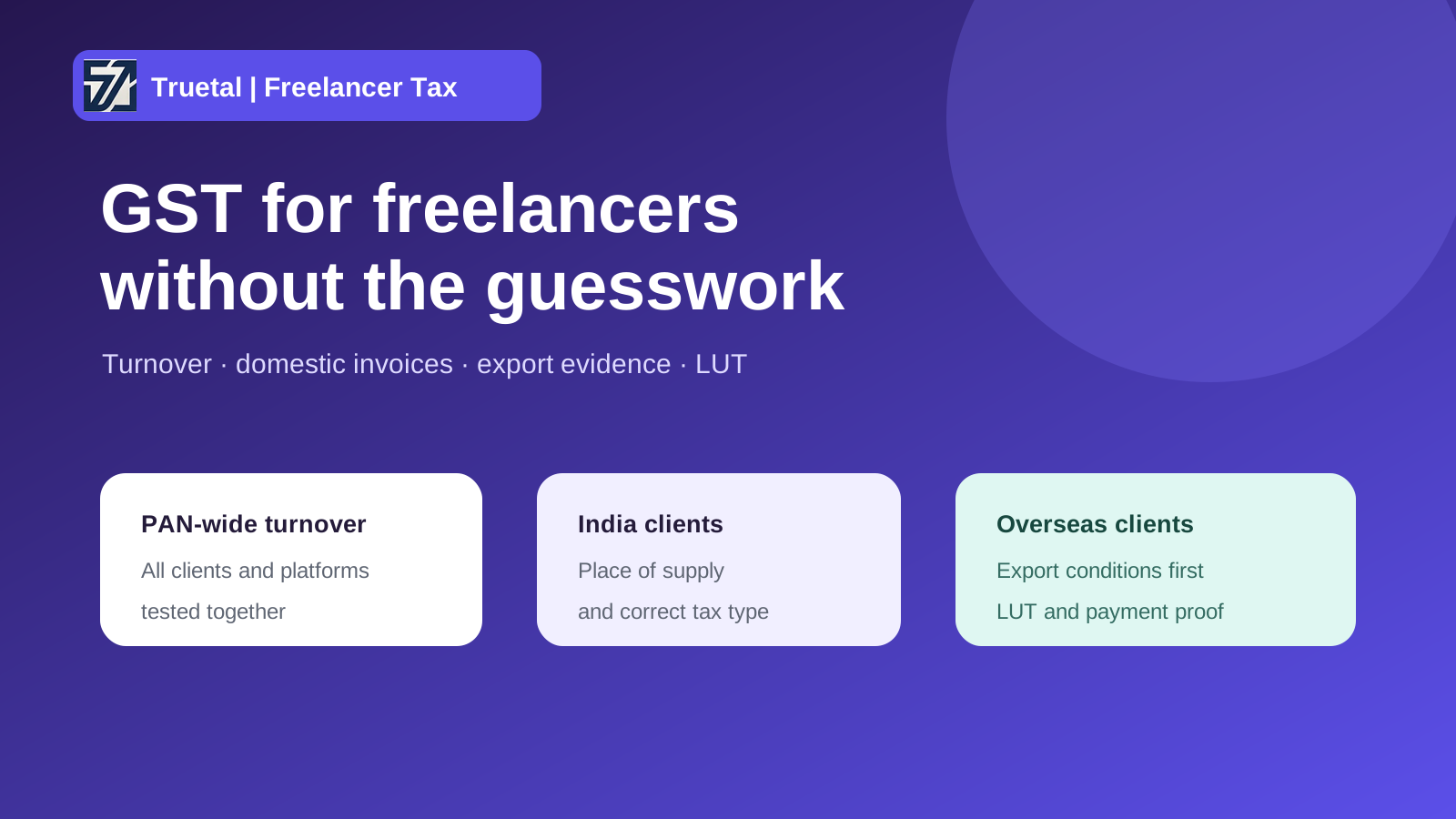
15 Oct 2026A practical GST decision guide for Indian freelancers: when registration may apply, how domestic and export services differ, and which invoice and payment records to keep.
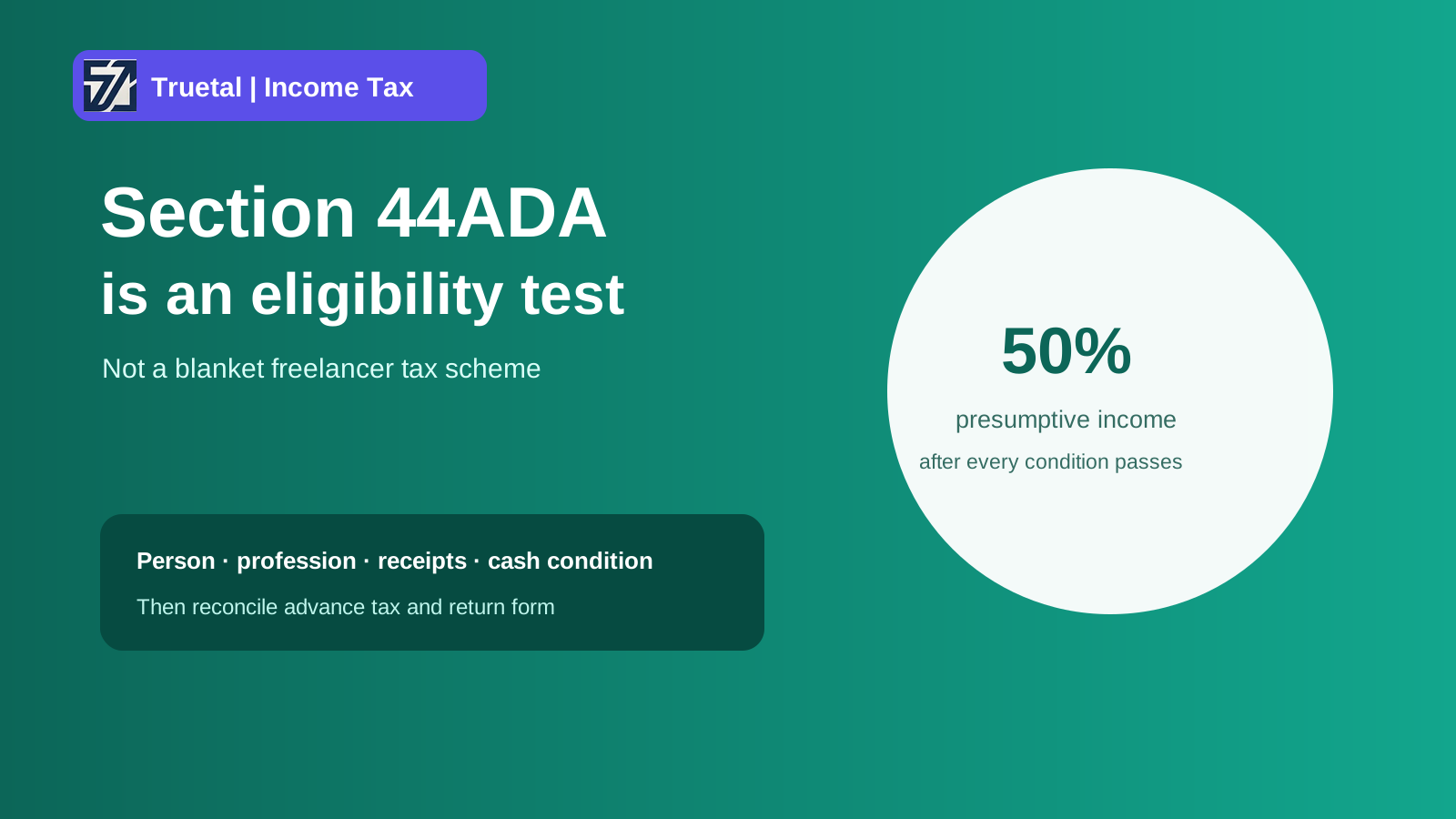
10 Oct 2026Section 44ADA is not a blanket freelancer tax scheme. Check residence, entity type, specified profession, receipts, the 5% cash condition and the effect of declaring presumptive income.
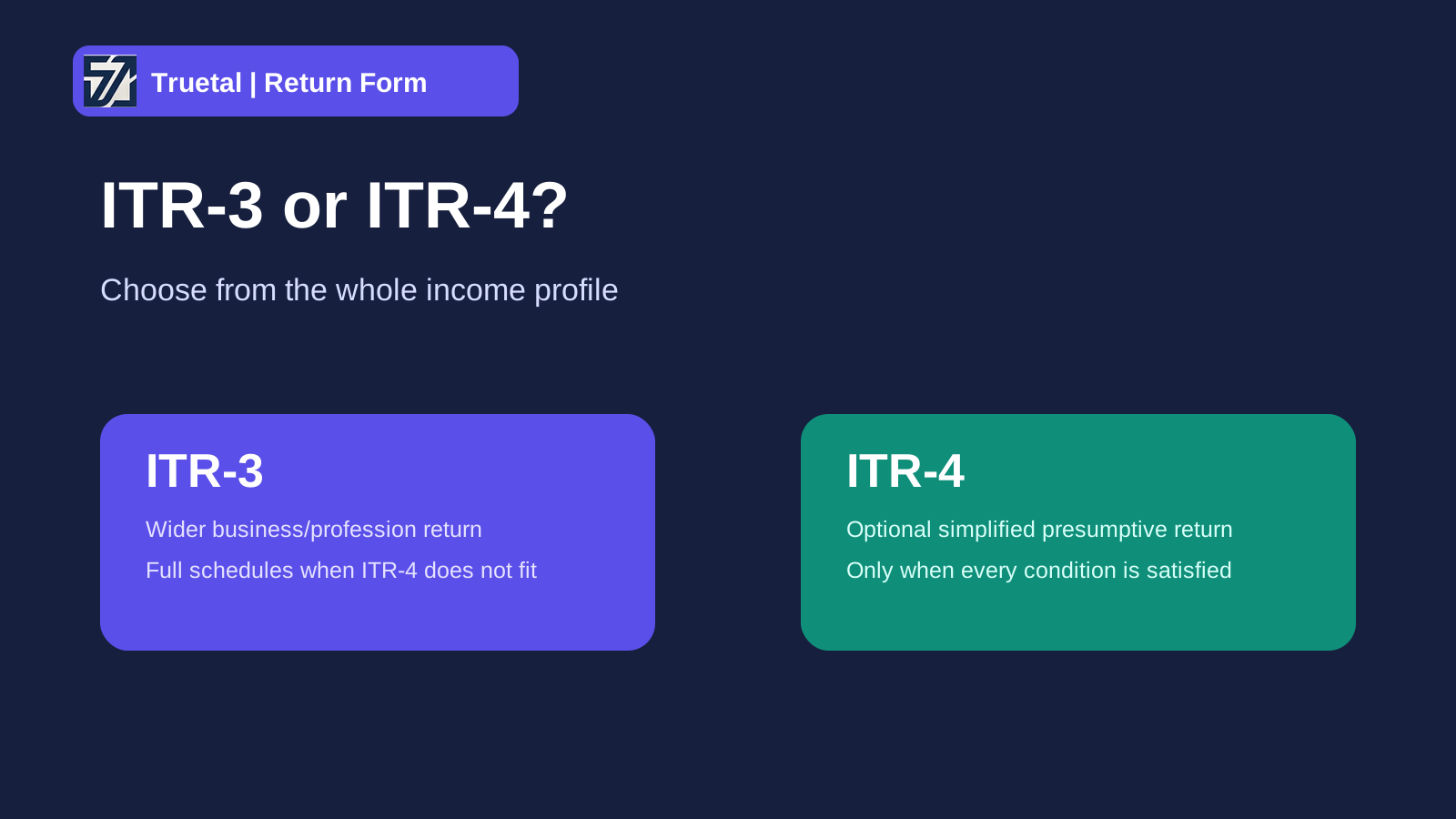
10 Oct 2026ITR-4 is a simplified optional form with strict conditions; ITR-3 is the wider individual/HUF business-profession return. Choose from the complete income profile.
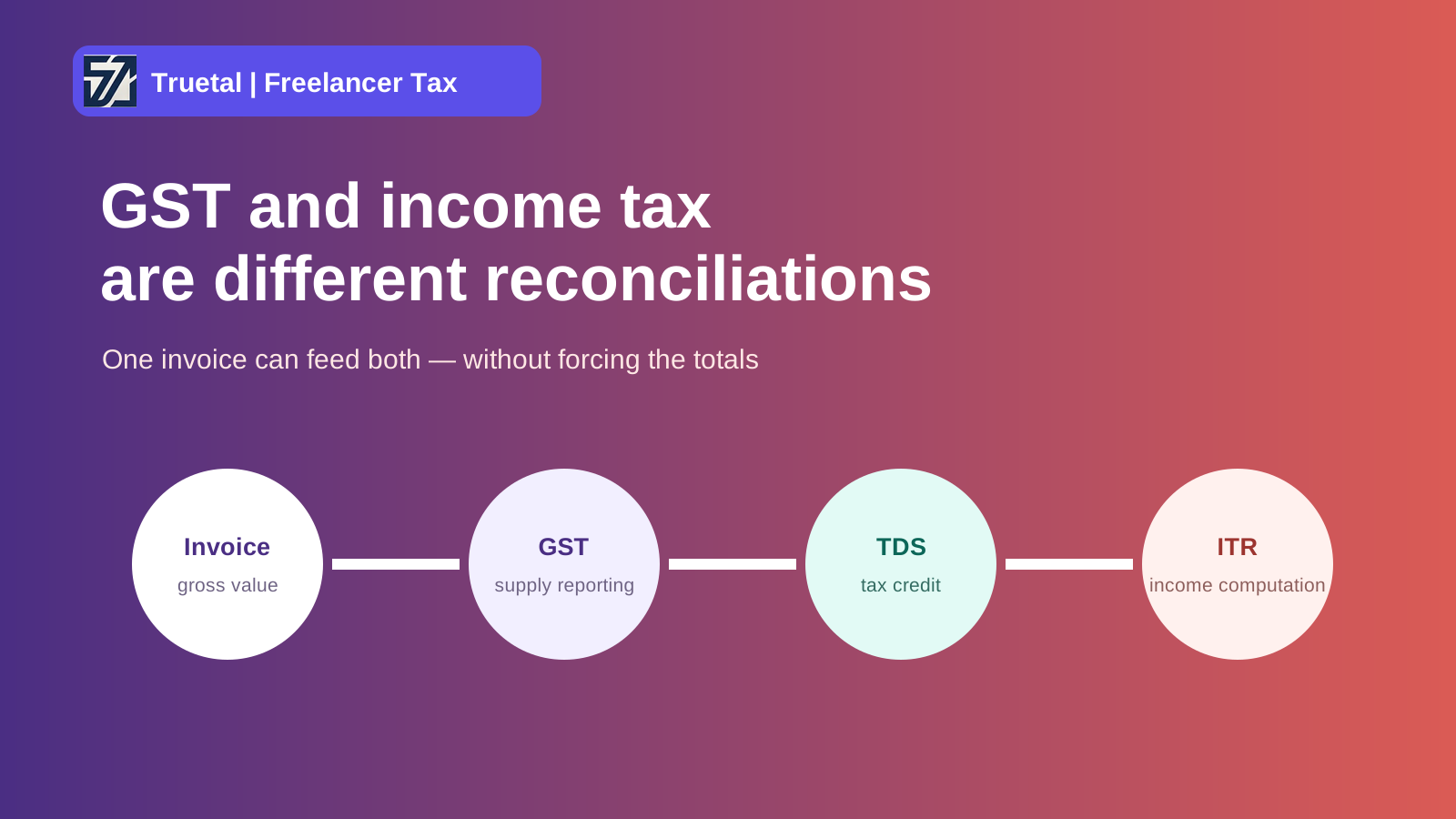
10 Oct 2026GST and income tax use different rules and periods. This annual map connects contracts, invoices, receipts, expenses, GST returns, TDS, advance tax and the final ITR.
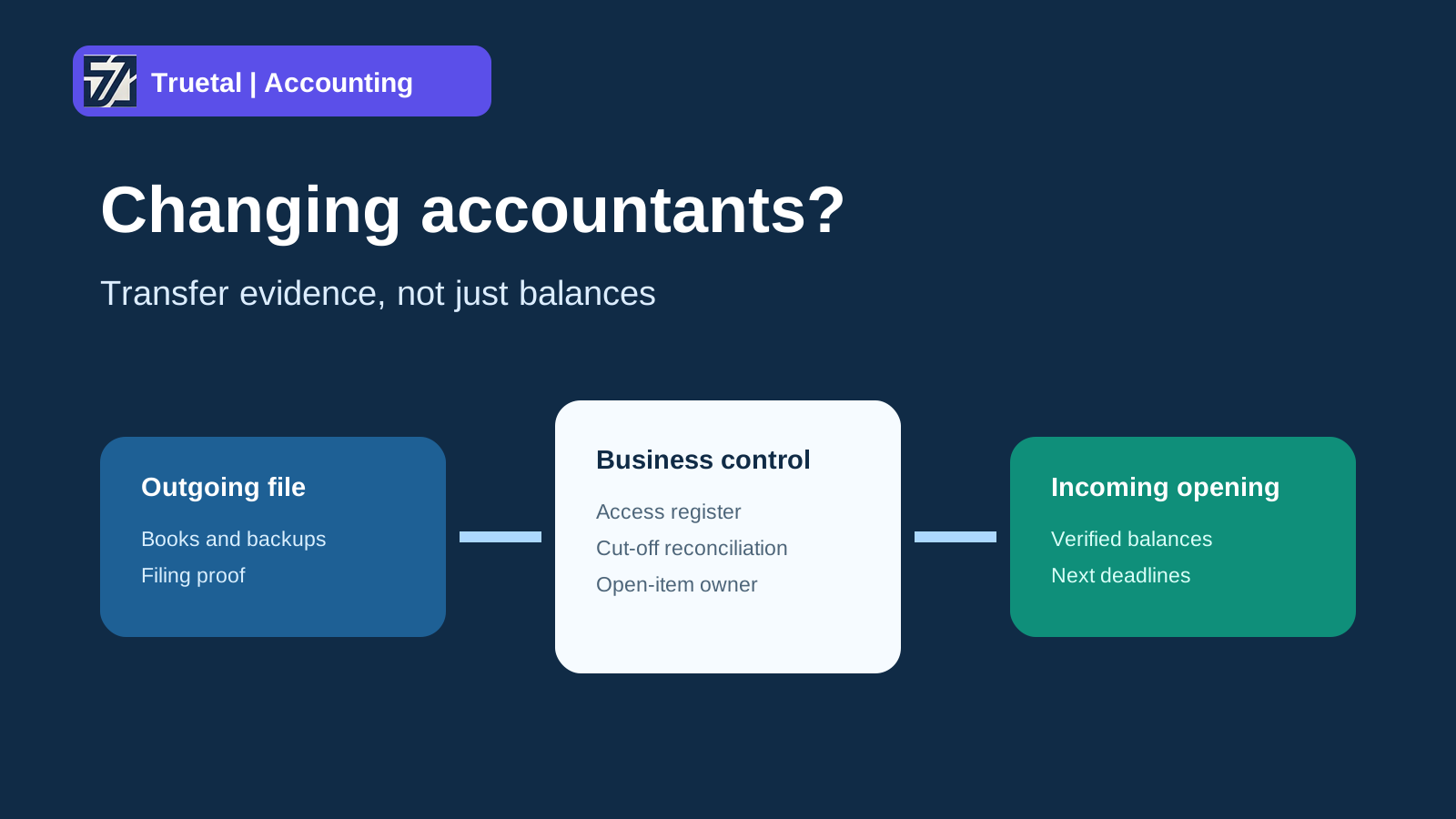
10 Oct 2026Move books, GST and income-tax evidence without losing access, opening balances or filing proof. Use this controlled handover checklist before the old engagement ends.
10 Oct 2026
A practical buying guide for Indian traders and distributors: warehouses, stock movements, returns, counts, reorder controls and the accounting evidence behind each quantity.
9 Oct 2026

A practical Rule 46 checklist for small businesses, with an intra-State worked example and the decisions that change recipient details, place of supply and tax type.
9 Oct 2026

Build a correct bank-to-books bridge, review timing items and explain payment-gateway payouts without auto-posting guesses. The goal is a supported difference, not a fully categorised screen.
9 Oct 2026

A practical distinction between the MCA edit-log requirement, ordinary user activity logs and source-linked accounting evidence—without assuming that every “audit trail” label means compliance.
9 Oct 2026

Understand operating, investing and financing cash flows with a worked Indian small-business example—and learn why profit, bank balance and cash flow answer different questions.
9 Oct 2026

The 57th GST Council recommended a new return-correction framework, an ITC reversal and reclaim statement, and an RCM statement. None is operational merely because it was announced.
9 Oct 2026

The GST Council recommended extending e-invoicing to specified inward RCM supplies and imports of services for ₹5 crore+ taxpayers. The mandate and technical process are not live yet.
9 Oct 2026

A two-phase GST refund overhaul proposes deemed acknowledgement and system-driven provisional refunds. Here is what exporters and inverted-duty businesses should prepare without assuming it is already live.
9 Oct 2026

The GST Council proposed adding specified input-service and capital-goods ITC to refund calculations. The dates and 60-month method need careful reading—and implementation is still awaited.
9 Oct 2026

The GST Council recommended intelligence-based, authorised interception and changes to transit-state detention. The proposal does not cancel today’s enforcement powers.
9 Oct 2026
The GST Council has recommended removing the blocked-credit restriction for health and life insurance. The relief is not operational yet—here is what employers should prepare while the amendment and effective date are awaited.
9 Oct 2026
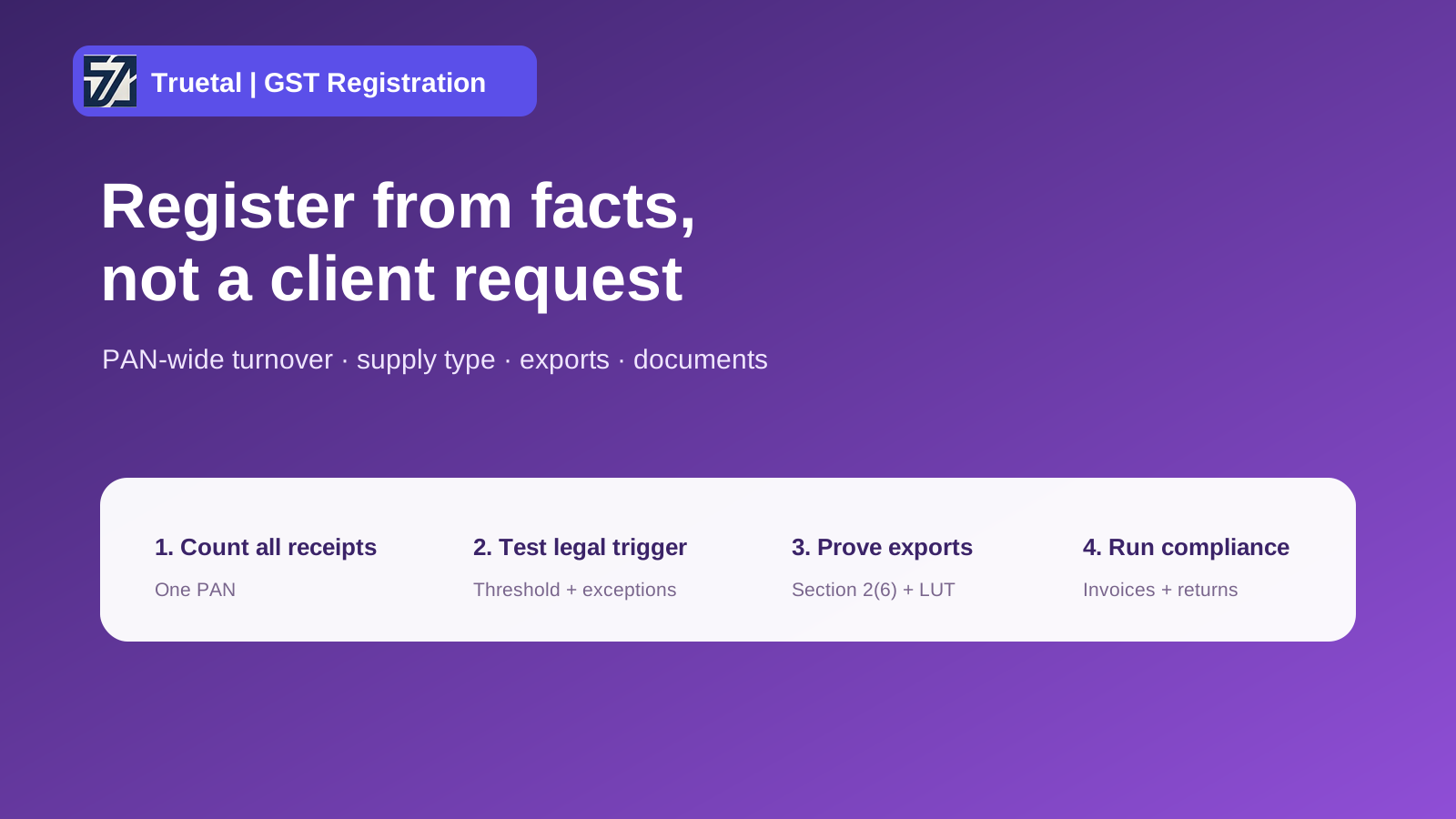
GST registration is filed online in FORM GST REG-01 through the GST Portal. The legal question comes first: confirm whether registration is compulsory, voluntary or not yet required.
30 Sept 2026
Turnover is only the first test. Aggregate turnover is PAN-wide across India and includes taxable, exempt, export and inter-State supplies, while excluding GST/cess and inward supplies taxed under reverse charge.
30 Sept 2026
Choose help by case complexity and responsibility. Straightforward document collation and portal navigation are different from deciding whether Section 24 applies, responding to an officer’s clarification, structuring registrations across States or handling an appeal.
30 Sept 2026
For a proprietorship, the proprietor’s PAN anchors the application. The legal name follows the PAN record; the trade name can identify the business. Liability still depends on PAN-wide aggregate turnover and compulsory triggers.
30 Sept 2026
The company—not its director—is the taxable person. Use the company PAN and exact incorporation name, disclose promoters/directors as required, appoint the authorised signatory and prepare principal-place evidence.
30 Sept 2026Check PAN-wide turnover, inter-State service relief, compulsory-registration triggers and export conditions before applying for GST as a freelancer or consultant.
30 Sept 2026
Do not use turnover alone or assume every marketplace seller follows one rule. Section 24, e-commerce operator duties and later notifications must be read together. Conditional enrolment routes exist for some unregistered intra-State goods sellers, but they come with restrictions.
30 Sept 2026
Decide the entity and operating footprint before opening REG-01. Check whether liability already exists, whether voluntary registration is commercially useful, and which State registrations are required.
30 Sept 2026
Build the checklist around four folders: applicant/entity, promoters or proprietor, authorised signatory and principal place of business. Then add entity-specific and activity-specific records. Use the current GST Portal checklist for permitted file types and sizes.
30 Sept 2026
Separate a clarification from a rejection. REG-03 asks for clarification or documents; REG-04 is the applicant’s response route within the stated portal deadline; REG-05 records rejection. Do not assume the rejected form can simply be edited.
30 Sept 2026
Start with the registration profile and business activity, then map each applicable form and its data source. Regular taxpayers commonly work with outward-supply reporting and summary tax payment returns; QRMP can change frequency and use IFF.
30 Sept 2026
Monthly GSTR-1 is ordinarily due on the 11th of the following month; quarterly GSTR-1 under QRMP is ordinarily due on the 13th after the quarter, subject to extensions. Nil filing is still required.
30 Sept 2026
Prepare GSTR-3B from reconciled records, not from memory or the portal summary alone. Monthly filers ordinarily work to the 20th; QRMP quarterly due dates are generally the 22nd or 24th depending on the State group, subject to extensions.
30 Sept 2026
Start with a portal status inventory for every GSTIN and period. Download notices, identify blocked later returns, reconstruct books month by month and quantify tax, interest and late fee under the current portal/notification position.
30 Sept 2026
Download the notice from the GST Portal, verify its reference and proceeding, record the issue and deadline, preserve every attachment and compare each allegation with source records.
30 Sept 2026
A taxpayer cancellation application is filed through the current GST Portal workflow, generally using FORM REG-16. The application asks for reason, effective date, closure/transfer details and liability information.
30 Sept 2026
Use the GST Portal’s Application for Revocation of Cancelled Registration route and FORM REG-21 when the cancellation was initiated by the tax officer and the legal conditions are met. The live order date and portal deadline control the action.
30 Sept 2026
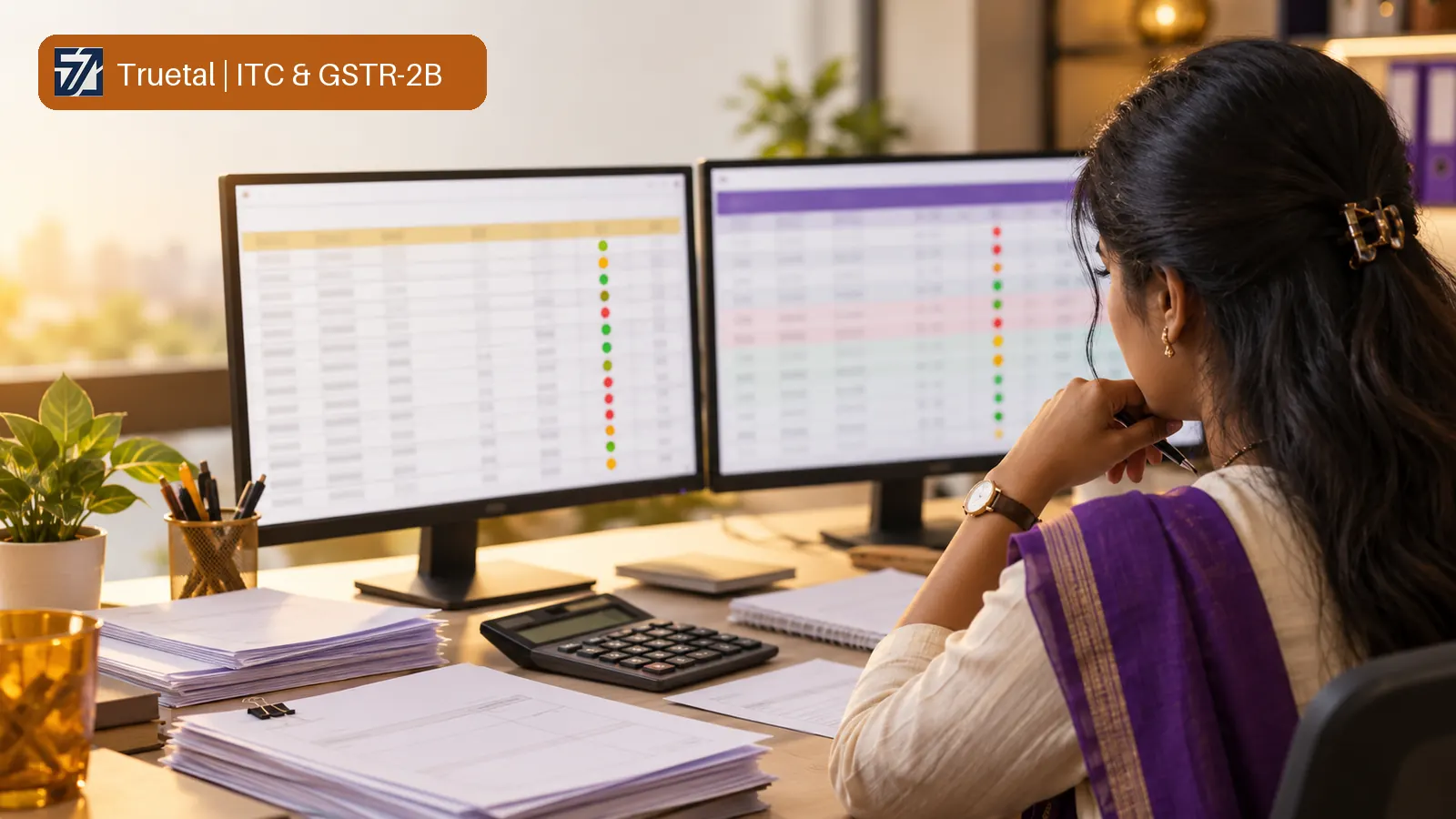
GSTR-2B is read-only and auto-drafted from specified supplier returns and other sources. You cannot upload a missing invoice into it. Keep accounting recognition separate from the ITC claim decision.
30 Sept 2026
Ask the vendor for document-level evidence: GSTIN, invoice number/date/value and the return period/table in which it was reported. Compare that evidence with your invoice and GSTIN. Then check the correct GSTR-2B and IMS status.
30 Sept 2026
Reconcile at document level, then apply eligibility. Matching is not the same as eligibility.
30 Sept 2026
Test e-invoice applicability in four steps: PAN-wide turnover history, notified entity exemptions, supplier and document type, and transaction scope. A lower current-year turnover does not erase an earlier threshold crossing.
30 Sept 2026
Confirm applicability and document scope, validate supplier/buyer, document, supply, HSN, tax, place-of-supply and value data, submit the prescribed JSON through an authorised IRP route, receive the IRN and signed QR, and attach that response to the business invoice record.
30 Sept 2026
Start with movement of goods, not invoice value alone. Apply the central threshold, exceptions and State rules, assign the generator, then use the correct validity category for regular, over-dimensional or qualifying ship-leg multimodal movement.
30 Sept 2026
An invoice above ₹50,000 often points toward an e-way bill, but it is not an automatic yes for every transaction. Some job-work or handicraft movements can require an e-way bill below ₹50,000.
30 Sept 2026
Outsource repeatable processing and specialist review when scope, evidence, access and approval are clear. Bookkeeping, bank reconciliation, payroll processing, GST/TDS preparation, month-end review and management reporting can be split between internal and external teams.
30 Sept 2026
A useful monthly checklist closes evidence, not only data entry.
30 Sept 2026
Track receivables at invoice and payment-allocation level. Each invoice needs customer, date, due date, original amount, approved credits, receipts, outstanding balance, ageing bucket, dispute status, last follow-up and next action.
30 Sept 2026
Reduce delays before the due date. Agree payment terms and acceptance evidence, invoice promptly, include the customer’s required references, confirm receipt, remind before and after due date, resolve disputes in a separate queue and escalate consistently.
30 Sept 2026
A practical India-focused guide to choosing GST accounting software by testing invoices, purchases, payments, bank reconciliation, inventory and final accounts.
26 Sept 2026
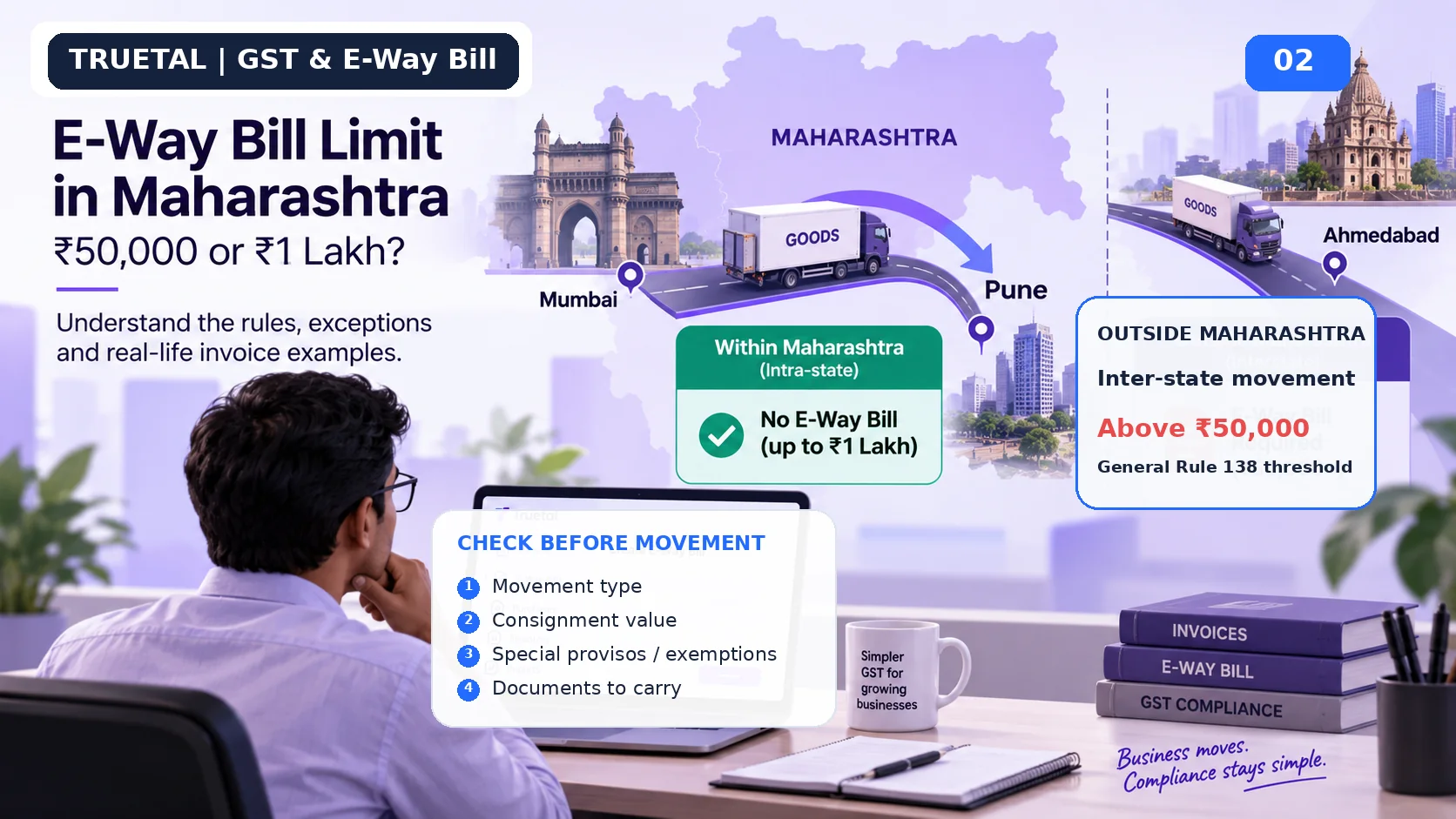
The 2026 Maharashtra e-way bill limit is ₹1 lakh for qualifying intra-state movement, while the general interstate trigger remains above ₹50,000.
26 Sept 2026
Match documents before matching totals. Separate purchase-book corrections, permitted IMS actions and Rule 37A reversal evidence in one review file.
26 Sept 2026
The new UPI framework applies a small MDR only to specified merchant transactions above ₹2,000. Here is exactly where GST sits — on the fee, never on the customer’s payment — and how to book it.
23 Sept 2026
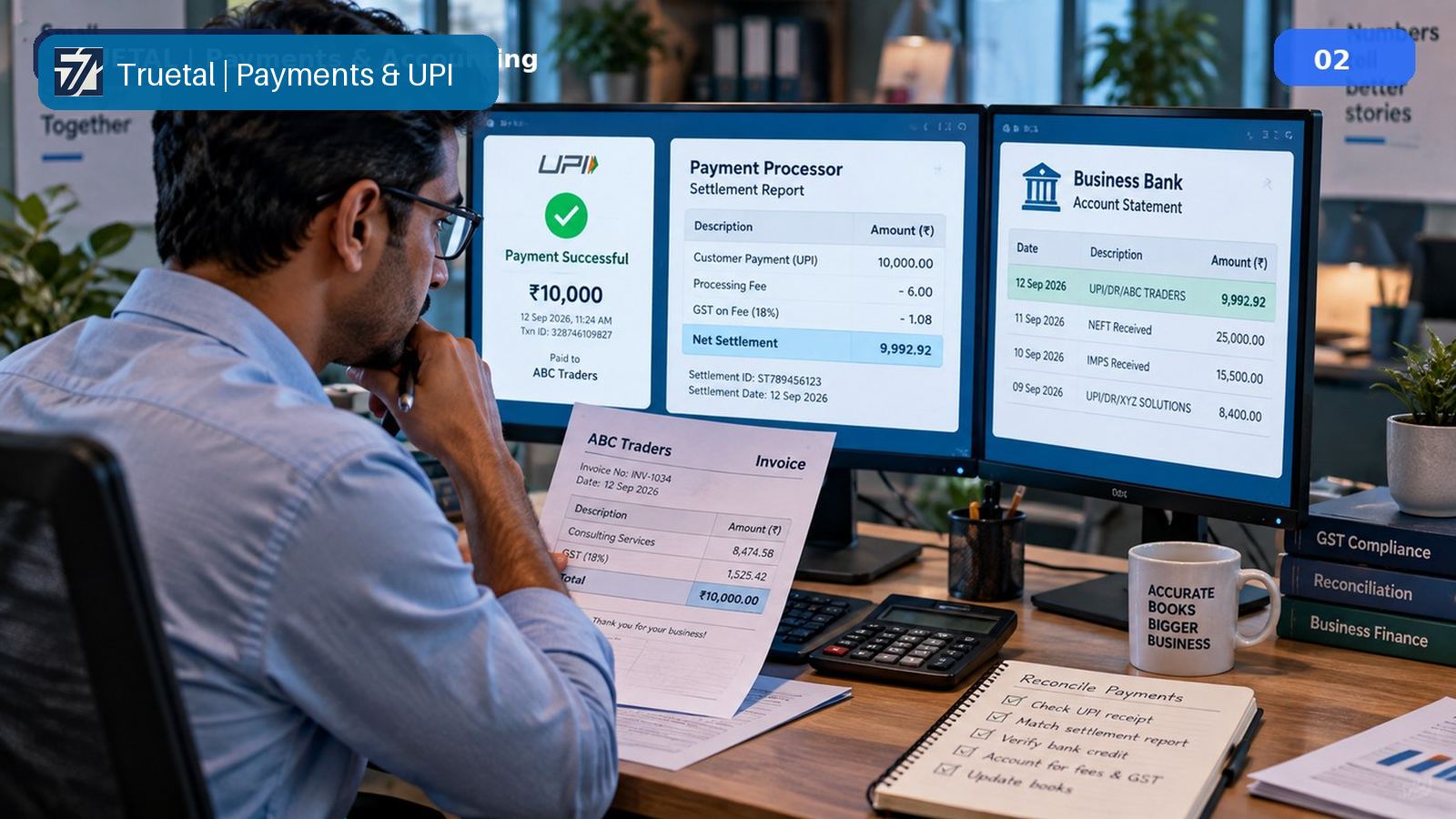
A gross-to-net gap between your invoice and your bank credit is normal once payment-processor fees enter the picture. Here is the entry that keeps your revenue, receivable and ITC all correct.
23 Sept 2026
Regional shipping disruption has created real cases of export cargo returning to India. Here is the document-first checklist for LUT, customs, and the accounting entries — before you touch a single ledger.
23 Sept 2026
A delay is not automatically a cancellation. Separate the physical, customs, commercial and forex questions before you decide whether anything about your GST or accounting treatment actually needs to change.
23 Sept 2026
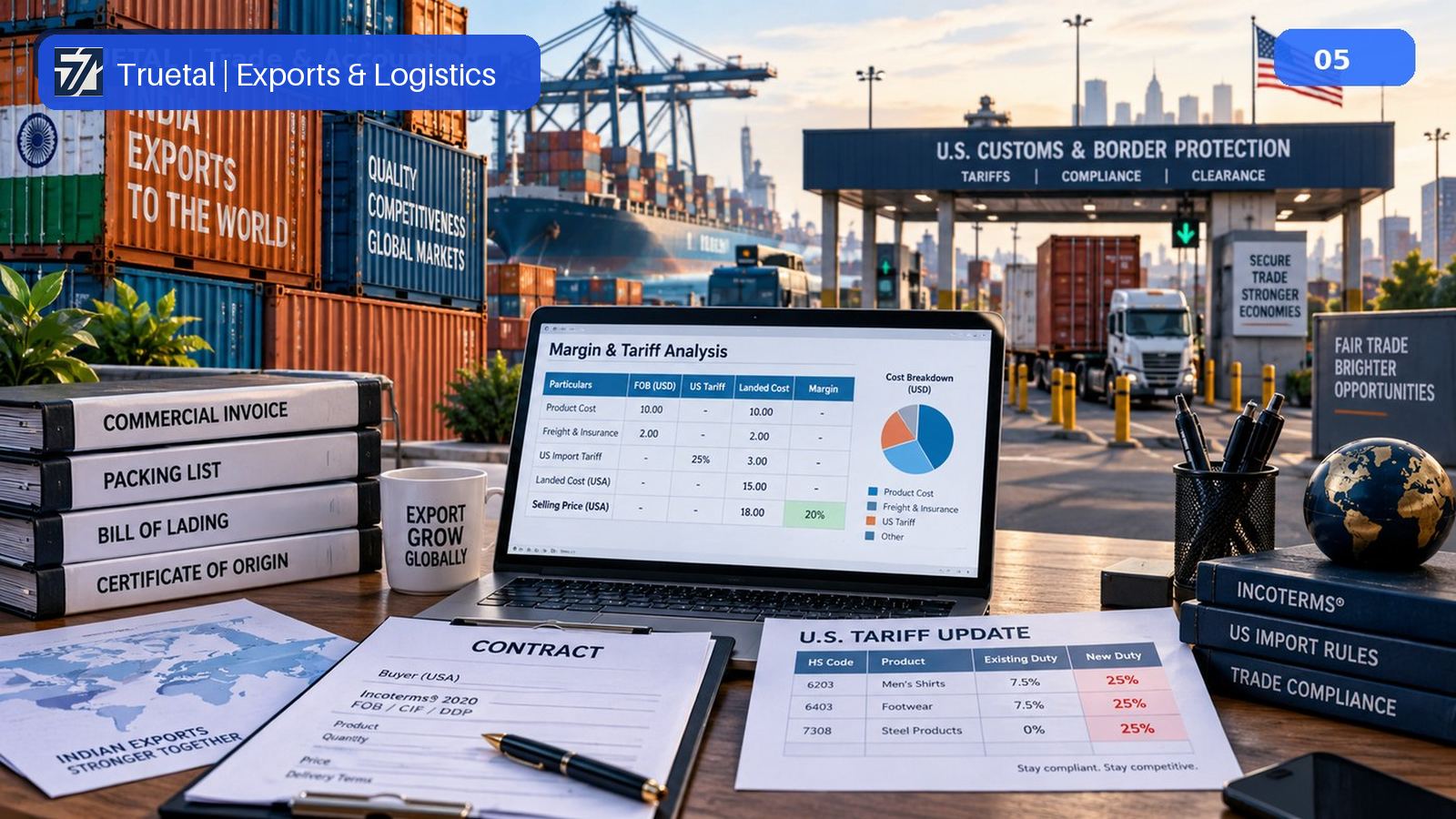
A US import tariff is a border levy in the destination market — it is not Indian GST. Here is exactly where the commercial impact actually lands, and where your GST/LUT treatment stays completely unchanged.
23 Sept 2026
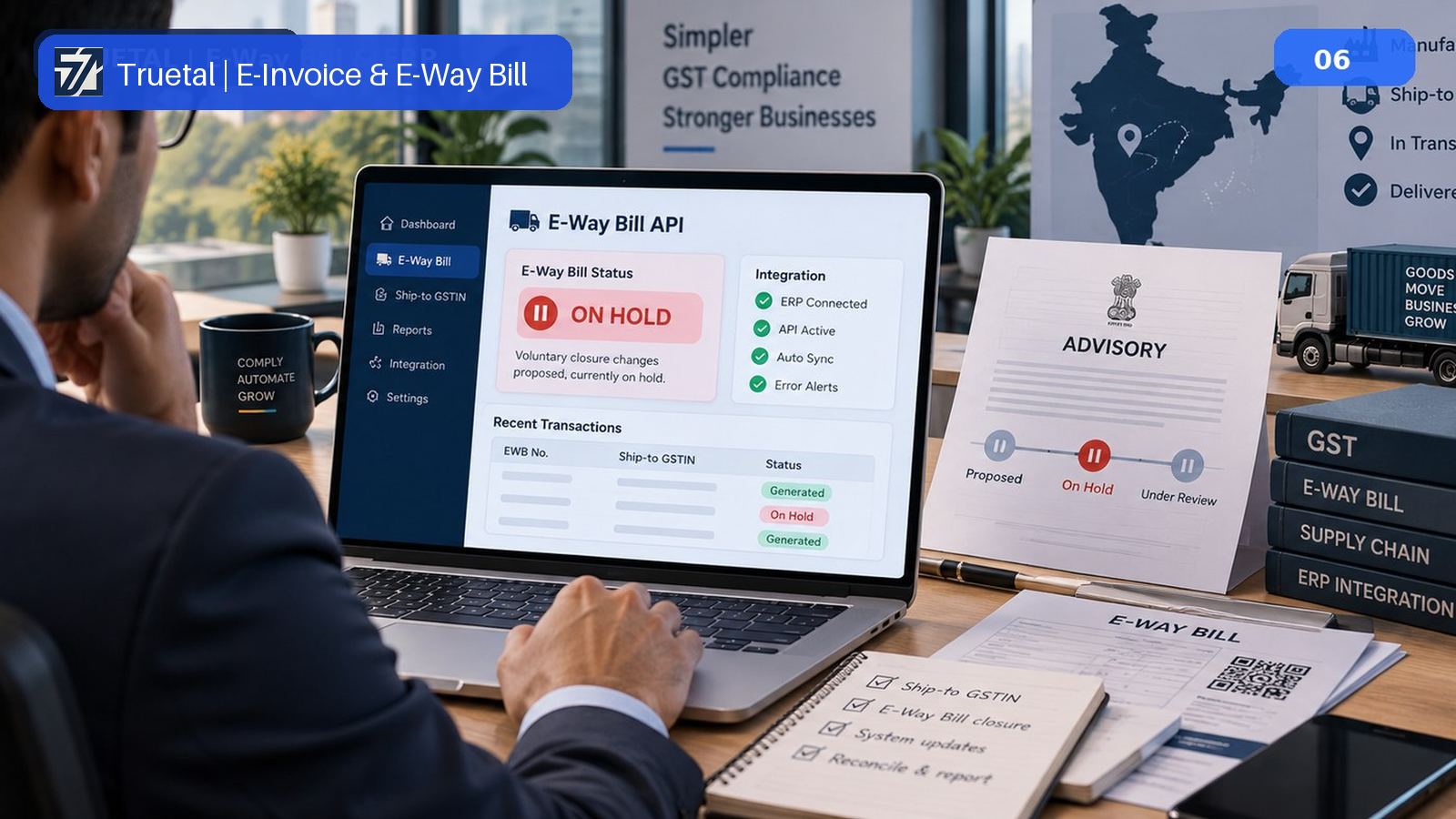
GSTN published detailed Ship-to GSTIN and closure changes, then the E-Way Bill system put the rollout on hold. Here is how to build for it without shipping invalid production behaviour.
23 Sept 2026
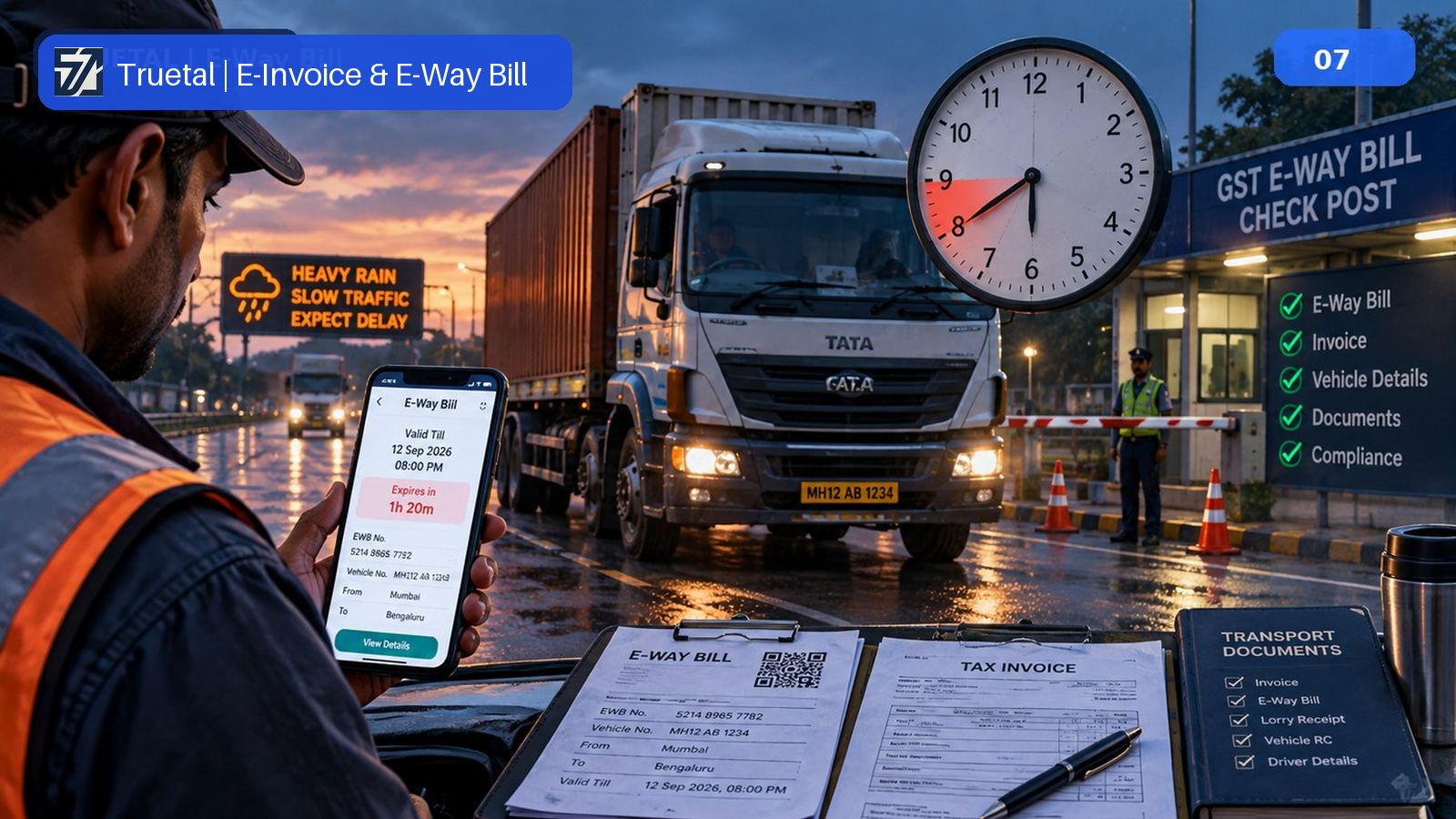
Goods should not keep moving on an expired e-way bill. Here is the official extension window, what counts as a genuine reason, and the evidence to collect the same day.
23 Sept 2026
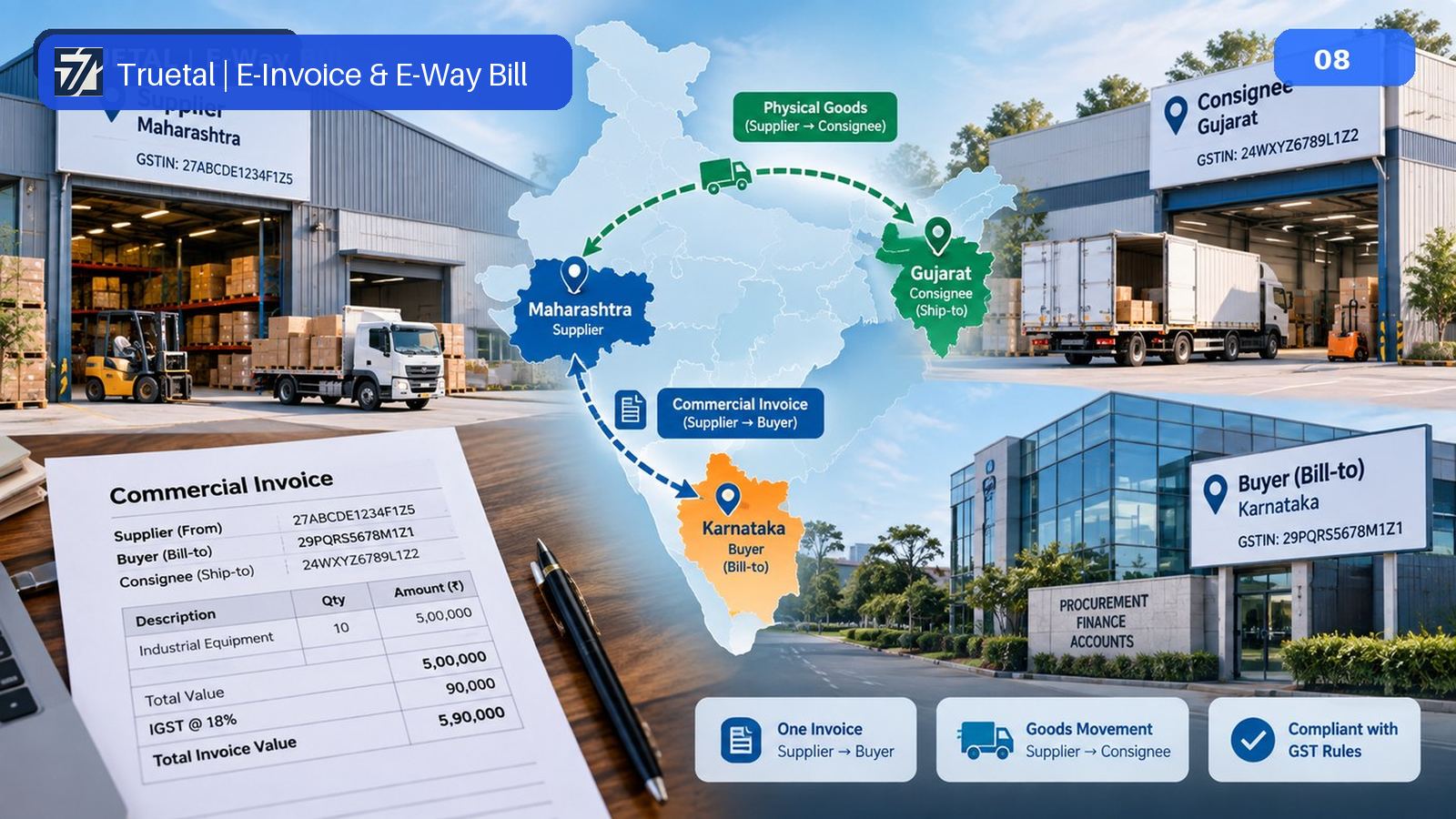
In a three-party transaction, the commercial invoice and the physical delivery point are two different arrows. Confusing them is one of the most common GST and e-way bill mapping errors.
23 Sept 2026
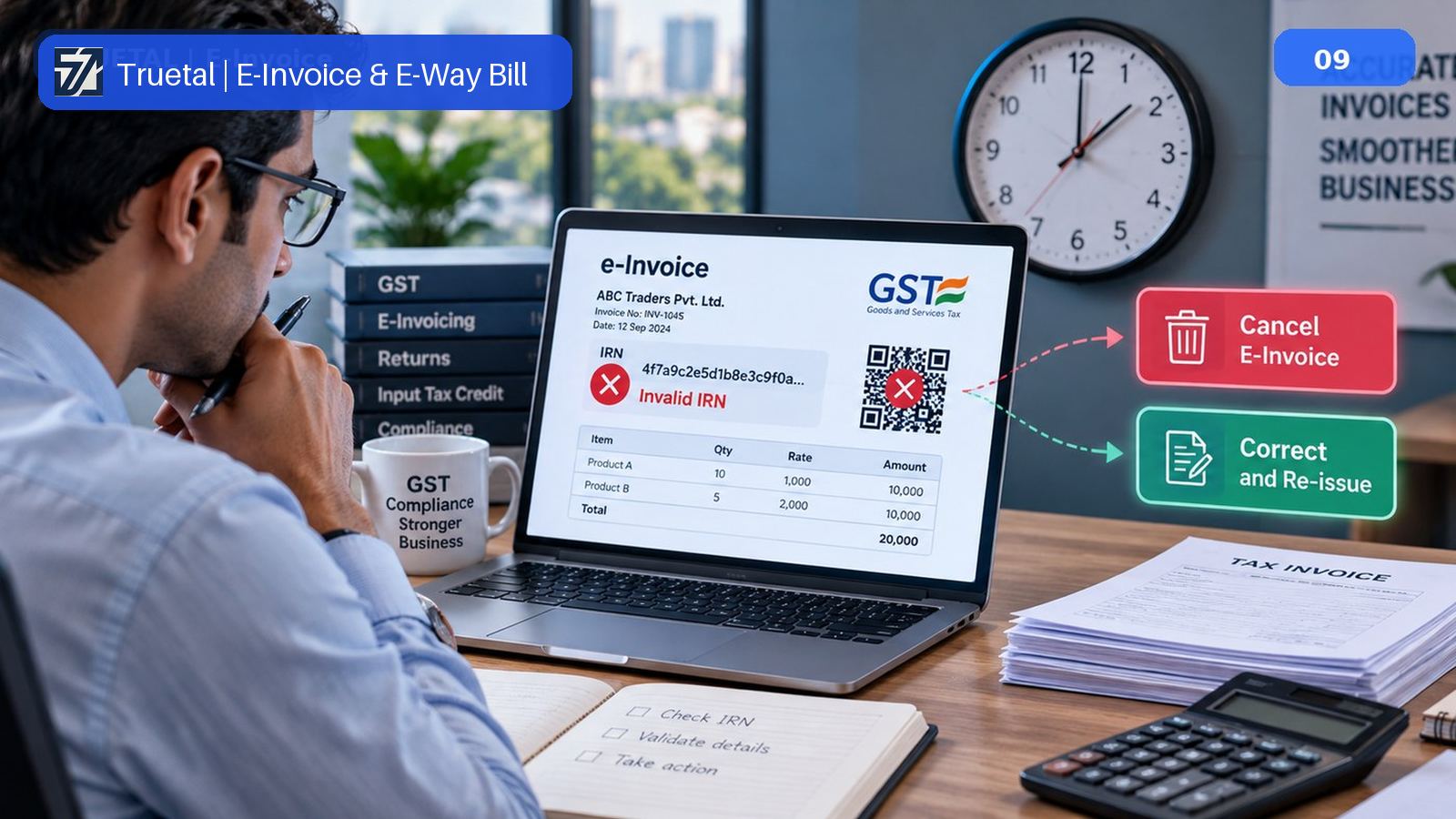
Once an e-invoice is registered on the IRP, it is not freely editable. What you do next depends entirely on whether the cancellation window is still open when you find the error.
23 Sept 2026
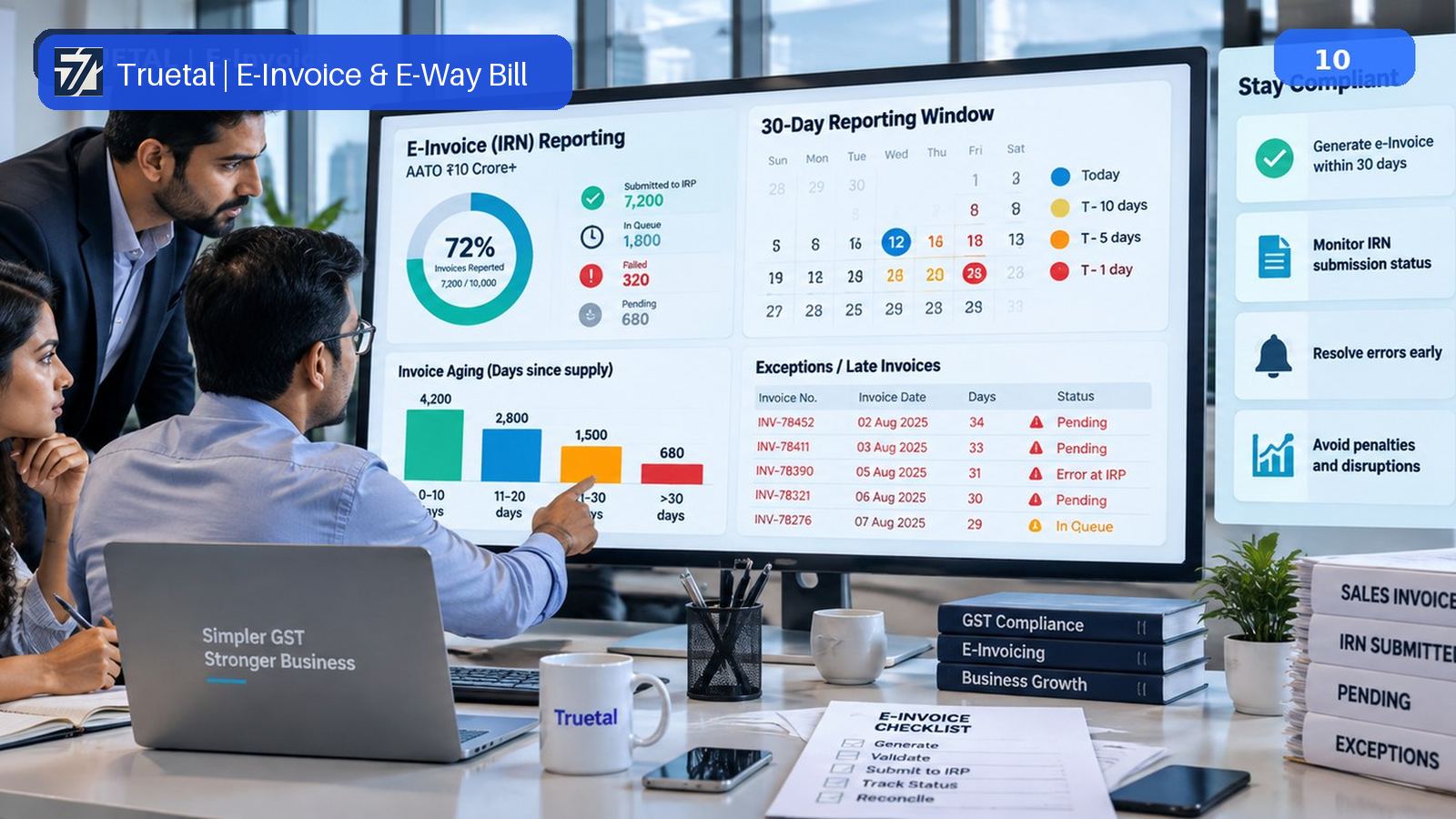
For taxpayers covered by the reporting time limit, an invoice reported too late doesn't get a grace period — it gets rejected. Build the aging control before it becomes a filing emergency.
23 Sept 2026
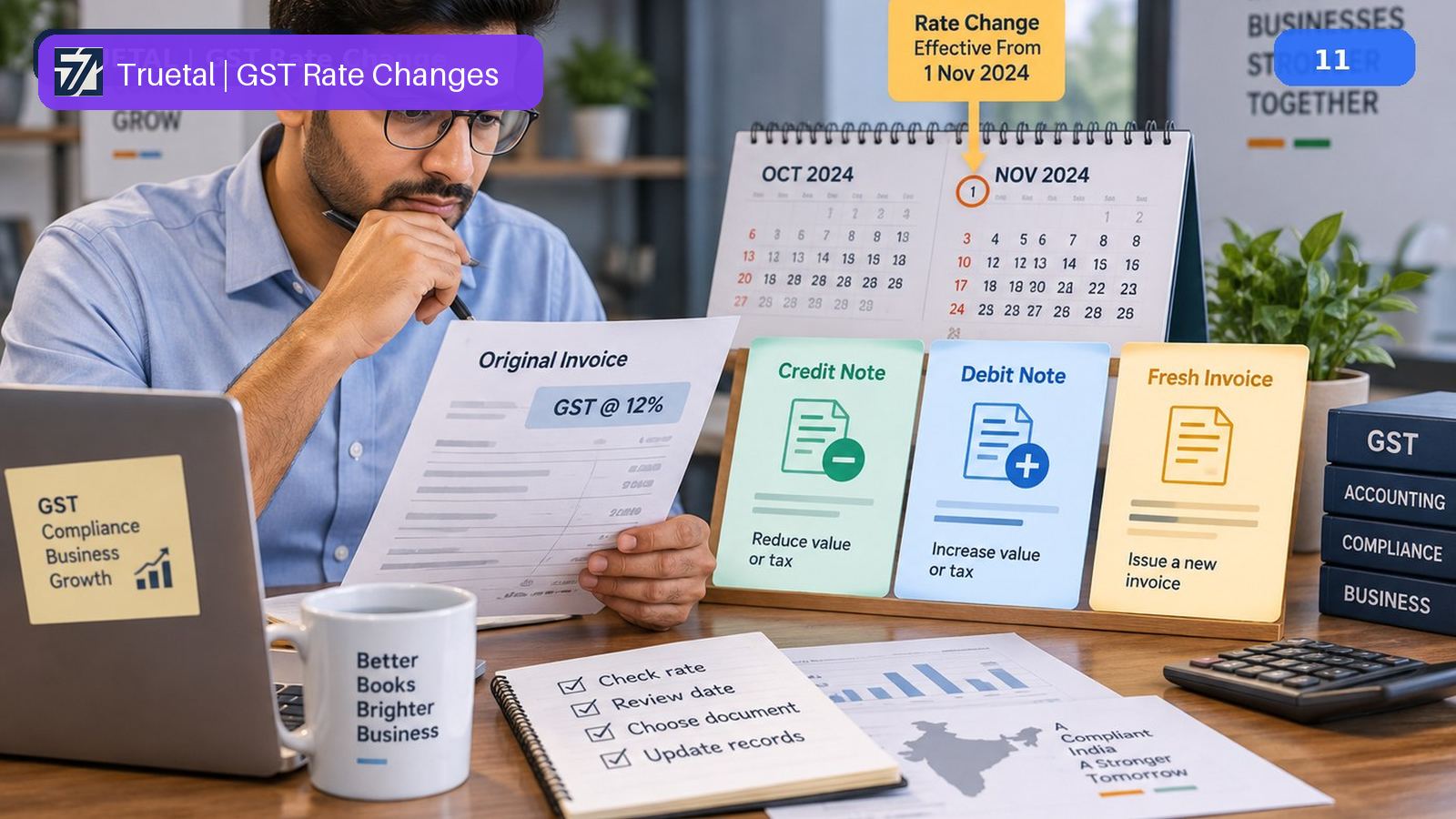
A rate notification does not automatically make every older invoice wrong. Verify the legally correct rate first, then correct the difference without breaking the audit trail.
23 Sept 2026
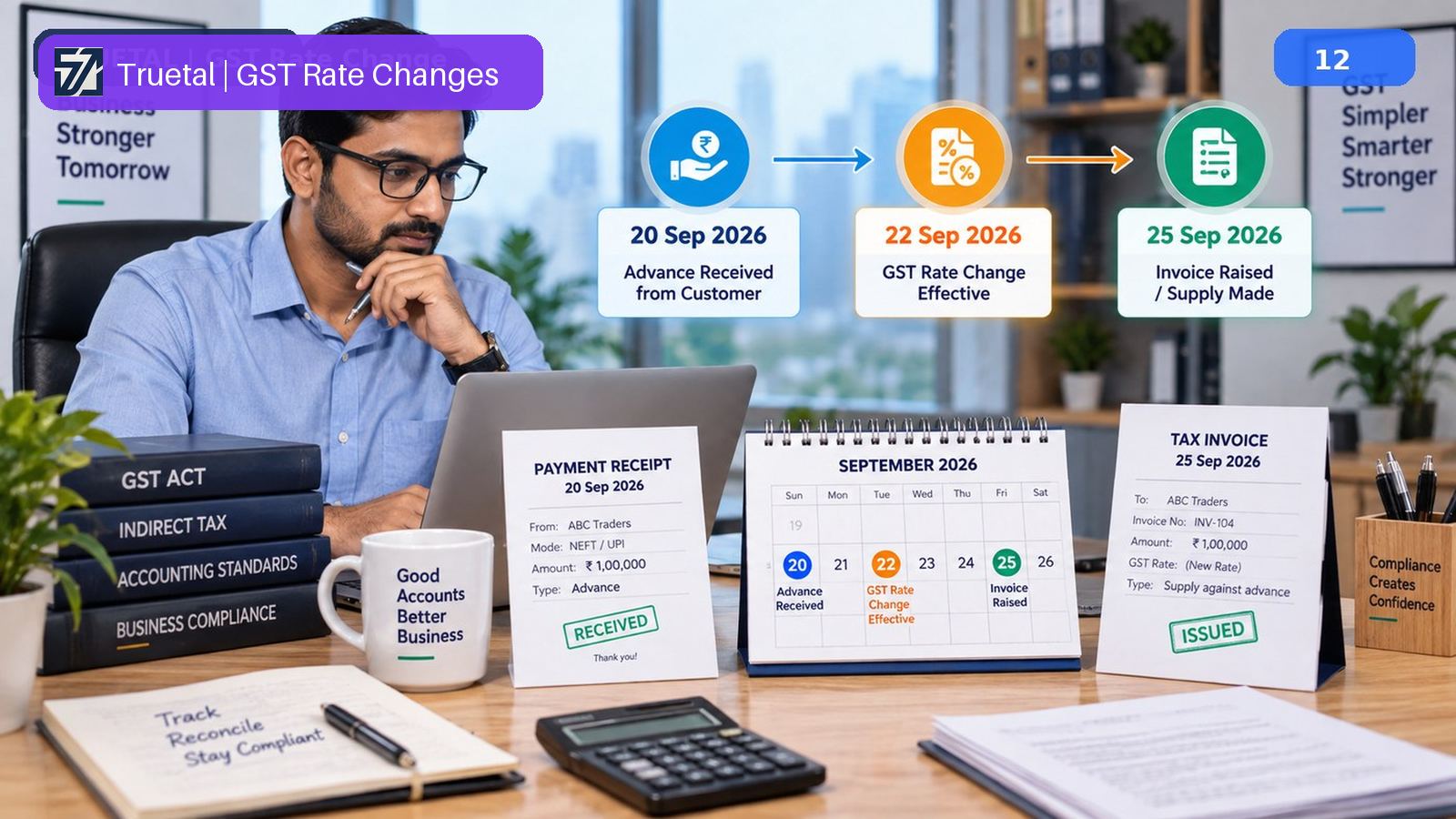
Rate-change cases cannot be solved by looking only at the invoice date. Map the payment date, invoice date and supply date against the time-of-supply rules before deciding.
23 Sept 2026
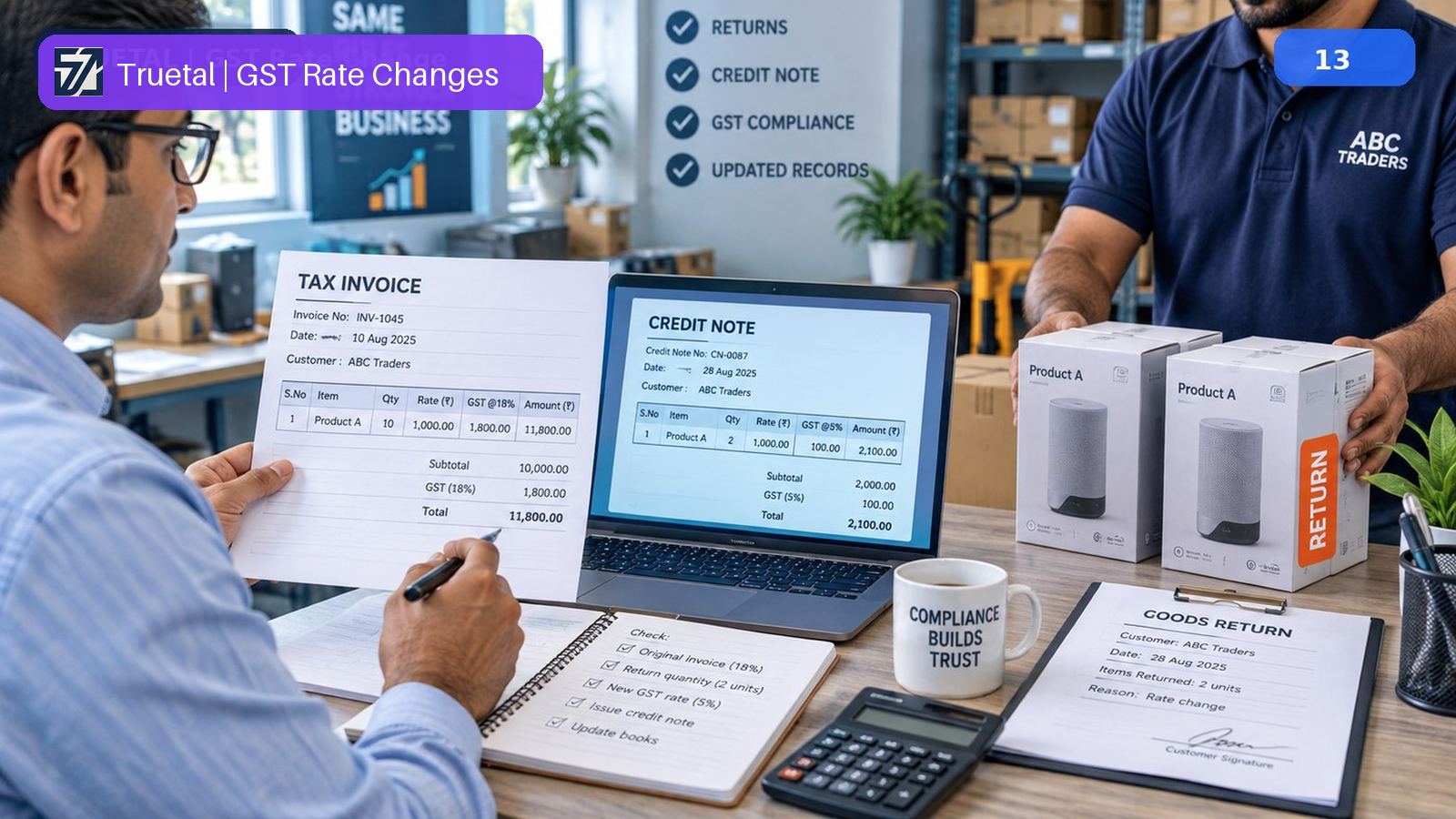
A credit note for returned goods should trace back to what it is reversing, not restart at today's rate. Here is how to handle a partial-quantity return correctly.
23 Sept 2026
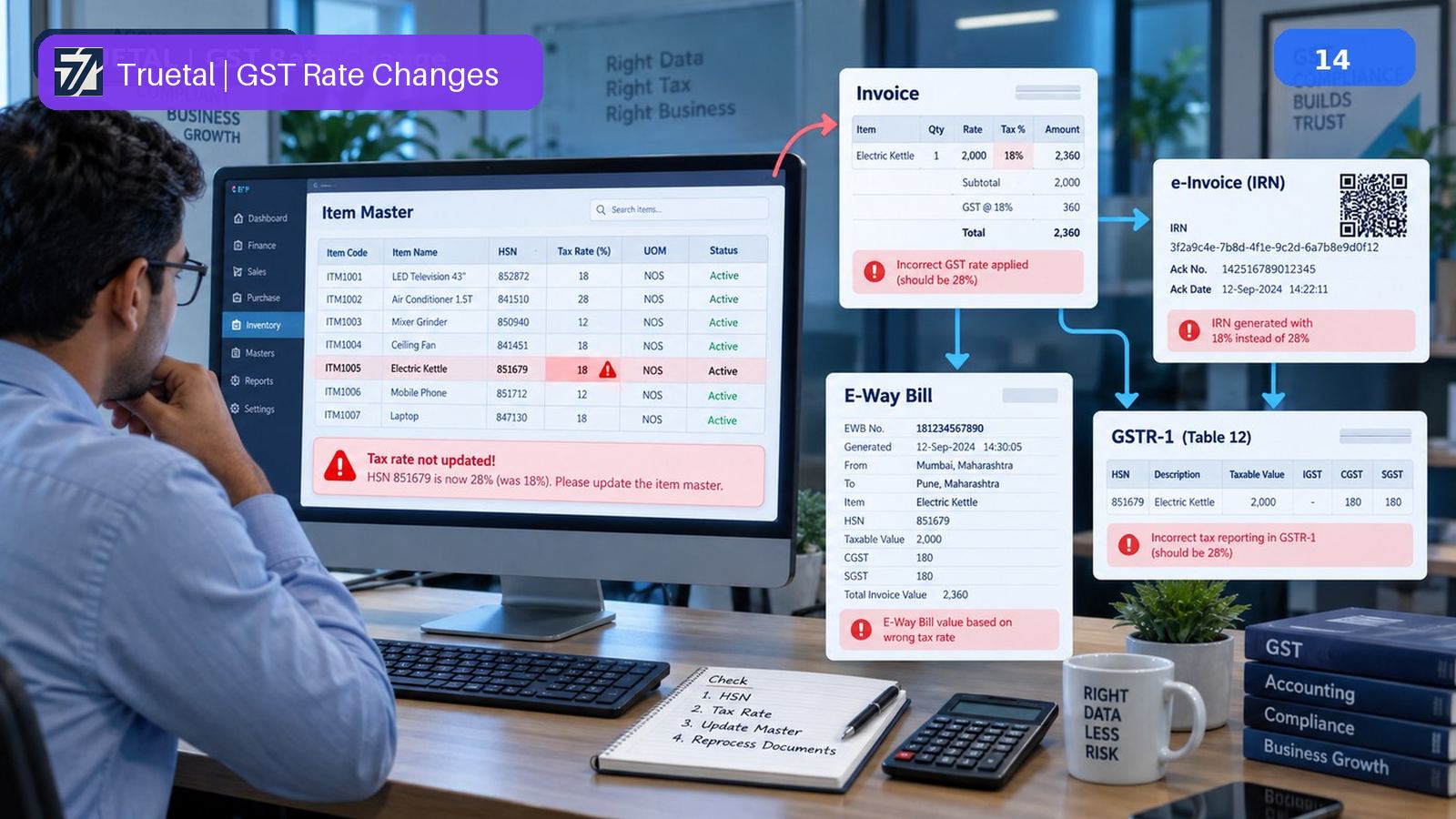
The practical failure after a rate change is usually master data, not tax theory. One unupdated HSN mapping quietly feeds five different downstream documents with the wrong rate.
23 Sept 2026
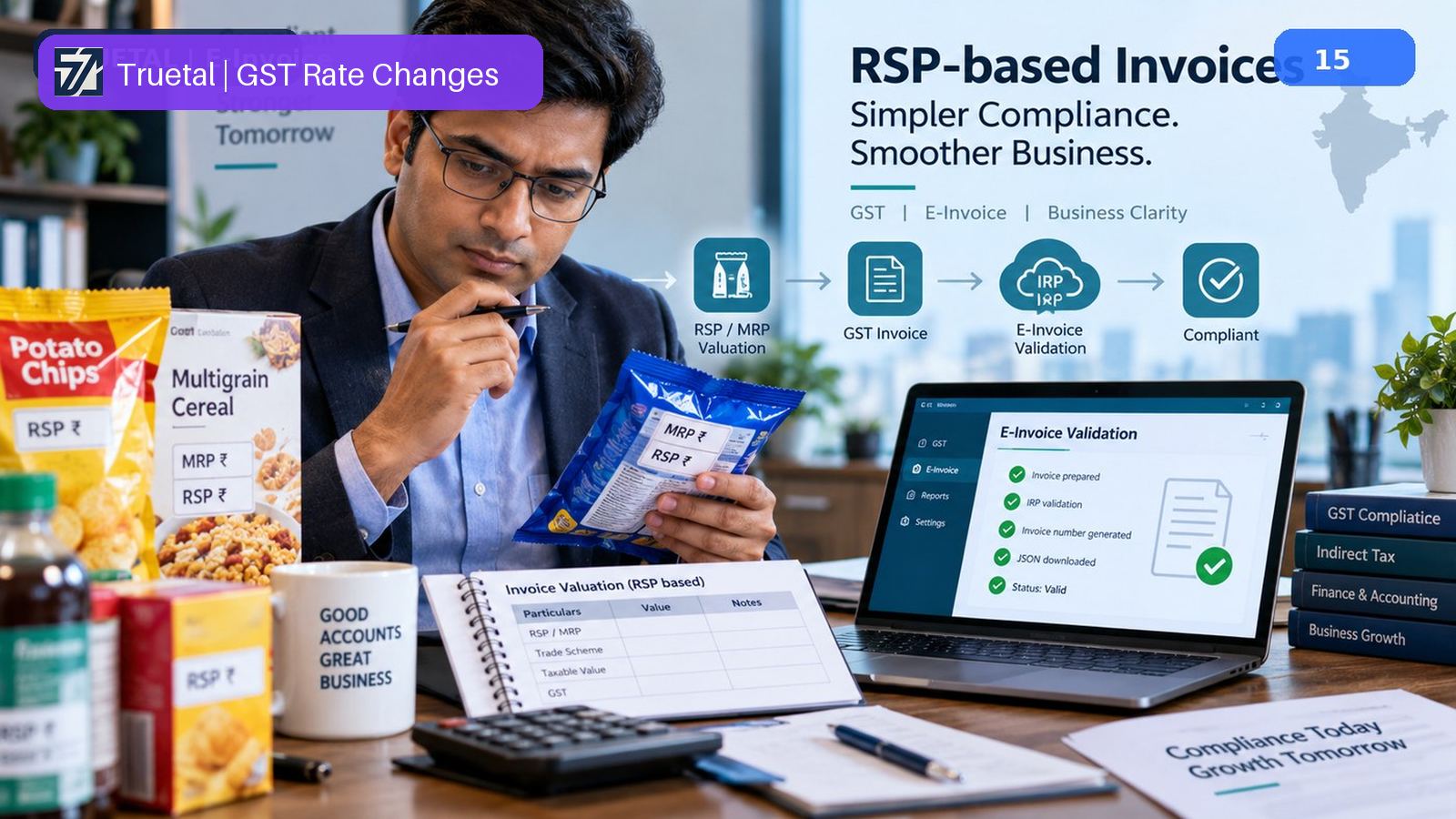
A notified RSP-based valuation can produce an invoice total that doesn't match the standard taxable-value arithmetic your IRP validation might expect. Here is what to flag, not "fix."
23 Sept 2026
The correction path depends entirely on whether GSTR-3B for the period has already been filed. Here is the right sequence for both cases.
23 Sept 2026
A GSTR-2B mismatch usually traces back to one of a handful of causes. Work through them in order before assuming your own books are wrong.
23 Sept 2026
Choose an IMS action from the document facts, not from a mismatch colour. See what Accept, Reject, Pending and No Action change in GSTR-2B—and what they do not prove about ITC.
23 Sept 2026
ITC claimed on an unpaid invoice must be reversed with interest if payment isn't made within 180 days — but it can be reclaimed once you do pay.
23 Sept 2026
A supplier-issued credit note you don't agree with can silently reduce your ITC through GSTR-2B unless you act on it through IMS.
23 Sept 2026
Section 17(5) blocks ITC on specific categories, each with its own exceptions. Claiming blindly or blocking too broadly are both real, costly mistakes.
23 Sept 2026
An evidence-led response workflow for DRC-01B Part B, including the Rule 88C seven-day clock, DRC-03 linkage, a tax-head worksheet and the DRC-01C distinction.
23 Sept 2026
Receiving an advance for a service can itself trigger the GST liability, before any invoice is ever raised. Here is how to handle the tax and the later adjustment.
23 Sept 2026
Exporting under a Letter of Undertaking means no IGST on the invoice — but only if a valid LUT is genuinely on file. Here is what to verify before invoicing.
23 Sept 2026
An e-commerce marketplace's settlement report bundles gross sales, TCS, fees and net payout together. Pulling these apart correctly is what keeps your GST books accurate.
23 Sept 2026
When a customer payment doesn't exactly match one open invoice, a consistent oldest-invoice-first rule beats ad-hoc guessing — and knowing when to flag instead of guess matters just as much.
23 Sept 2026
Under accrual accounting, an expense belongs to the year the service was actually delivered — not the year the vendor happened to get around to invoicing it.
23 Sept 2026
Pay a registered MSME vendor late, and the expense itself can become disallowed for that financial year under Section 43B(h) — a real tax consequence, not just a commercial one.
23 Sept 2026
Stock levels and revenue recognition don't have to move on the same date — but they should each move on a clearly defined, consistent trigger, not whichever event happens to be recorded first.
23 Sept 2026
AI in accounting can reduce repetitive invoice, matching and reconciliation work, but every material outcome still needs evidence, access controls and a named human reviewer.
23 Sept 2026Callback requested. The Truetal team will contact you.
Hi! Ask me about GST, invoices, ITC or how Truetal works.