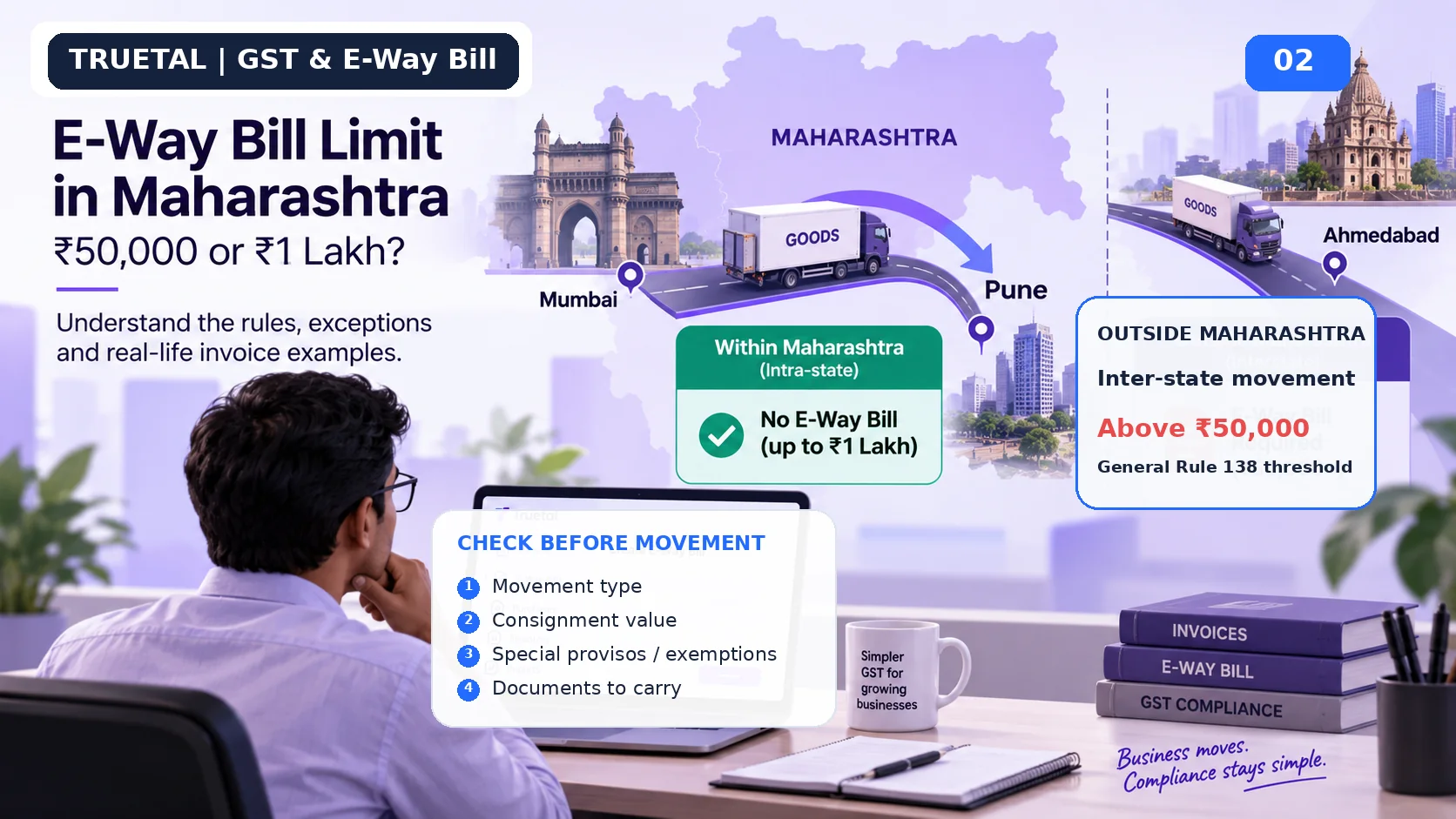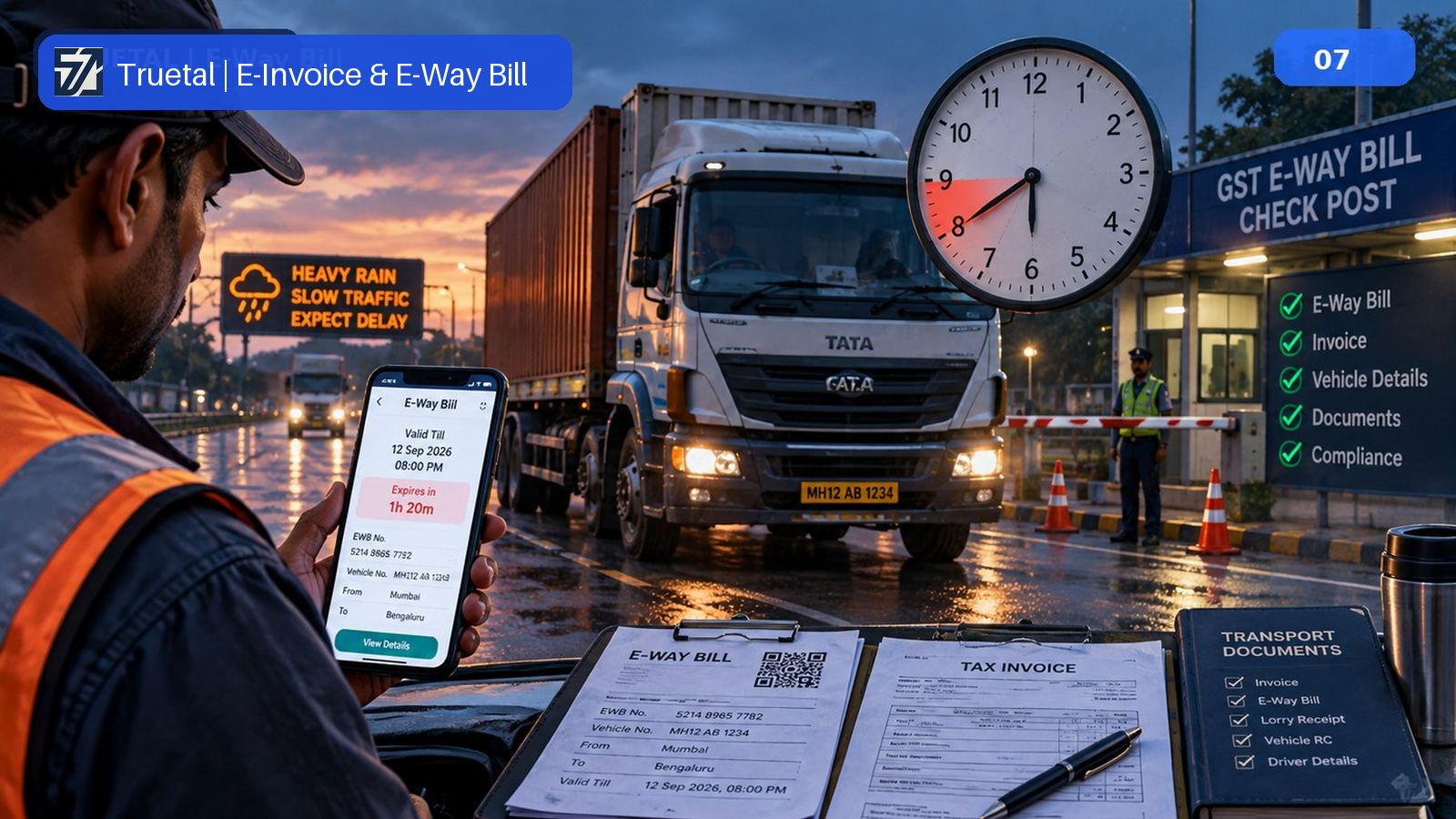
The ₹50,000 figure is widely repeated as an invoice rule. The actual central test is based on movement of goods and consignment value, with exemptions and State-specific intra-State rules. A mixed invoice can also require a more careful value calculation.
That is why this guide starts with the decision, not the form. The goal is to leave you with a short evidence list, a clear owner and a next action that does not overstate what software or a portal screen can decide.
The Short Answer
An invoice above ₹50,000 often points toward an e-way bill, but it is not an automatic yes for every transaction. Confirm that goods are moving, calculate consignment value under the rule, exclude the value of exempt goods in a mixed consignment as prescribed, check listed exemptions and apply the relevant State/UT position for intra-State movement. Some job-work or handicraft movements can require an e-way bill below ₹50,000.
Last reviewed: 30 September 2026. Due dates, portal validations and notification-based exceptions can change. Verify the live portal and current primary source before acting.
In Plain Words
Use a movement checklist: document, goods, value, origin/destination, reason, mode, distance and exception. If goods do not move, the invoice value alone does not create a transport document. If goods move without a sale, an e-way bill may still be required.
Use three separate columns in your working: what your books say, what the GST system says, and what the law or current official guidance requires. Those columns often overlap, but they are not interchangeable. Keeping them separate prevents a software status or portal total from becoming an unsupported tax conclusion.
Why This Problem Happens
Teams usually begin with a remembered threshold, a dashboard number or a message from another party. The underlying evidence arrives later and may tell a different story. Names, GSTINs, periods, document numbers, State rules, amendments and timing can each change the answer.
The practical fix is a repeatable review trail. Record the source, the period, the exception, the person responsible and the evidence that closes it. If a fact changes later, update the working rather than silently rewriting history.
The Decision Framework
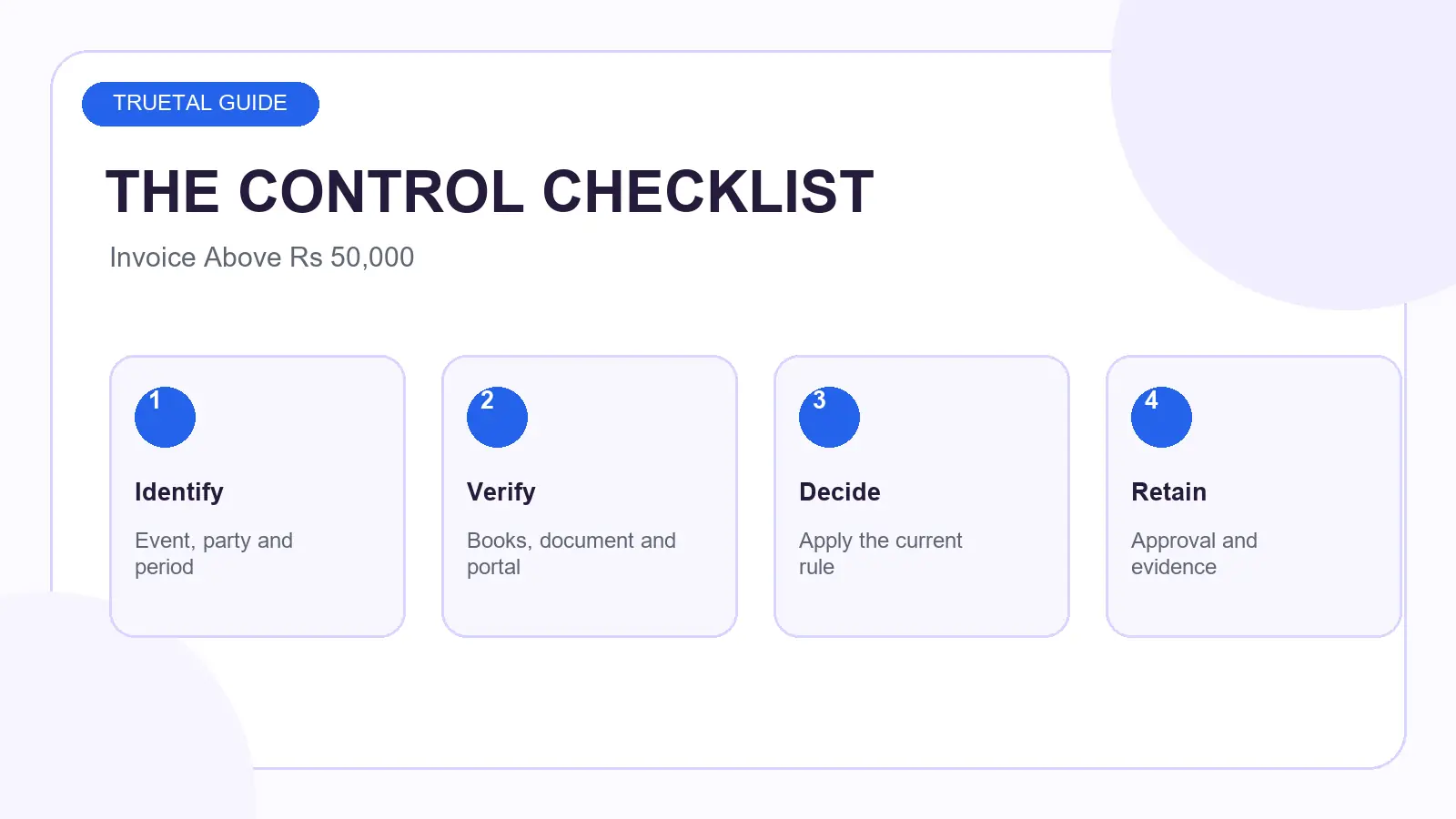
- Identify the event. What registration, return, invoice, movement, payment or notice is actually in question?
- Fix the period and parties. Confirm GSTIN, PAN, State, counterparty and relevant tax period.
- Compare the evidence. Put source documents, books and portal data side by side.
- Apply the current rule. Use the official source linked below and record any exception.
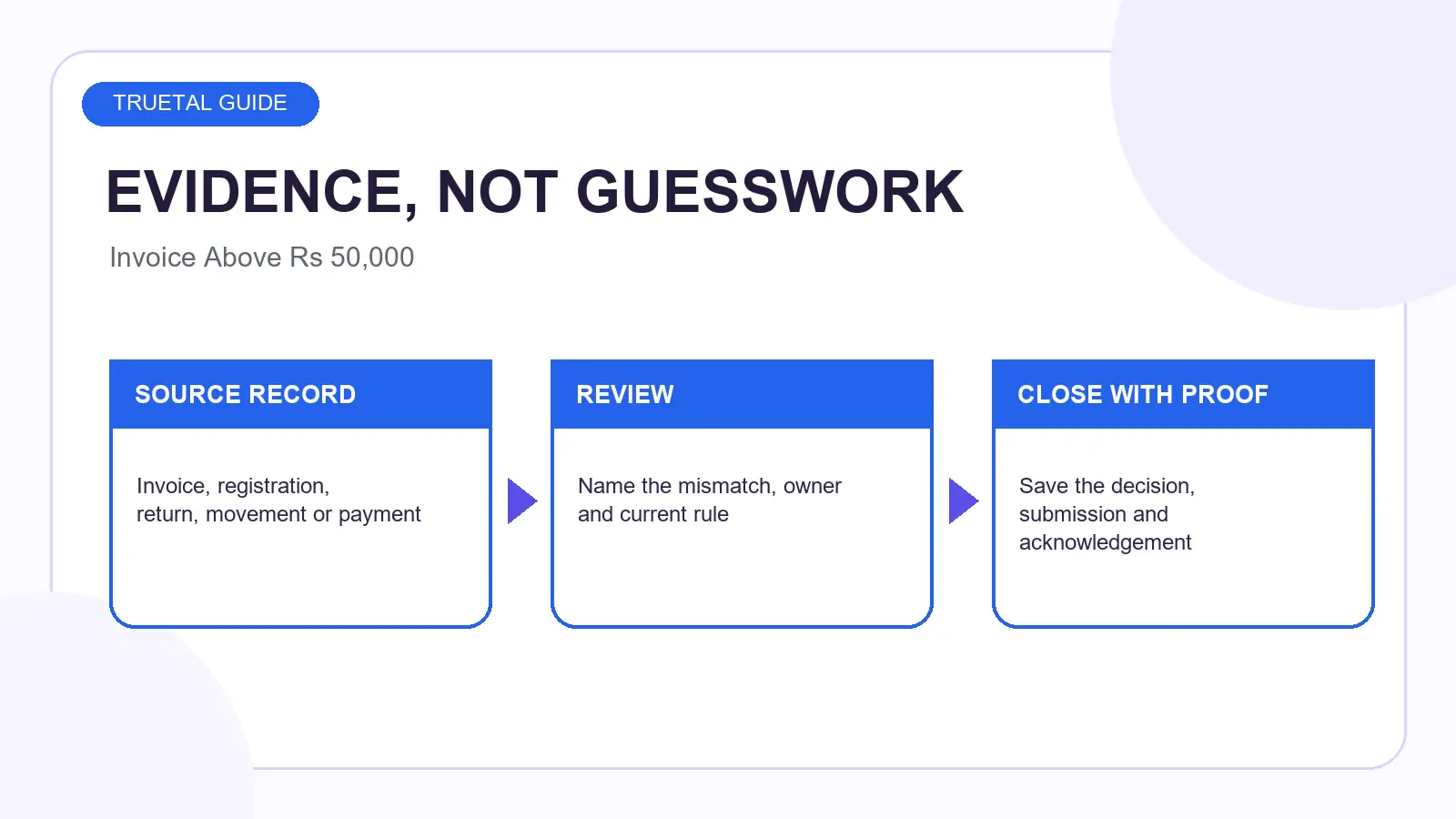
- Approve and retain proof. Keep the working, submission and acknowledgement together.
Step-by-Step Checklist
- Confirm physical movement of goods. Add the supporting record to the working and assign a named owner before moving to the next step.
- Compute consignment value under the applicable rule. Add the supporting record to the working and assign a named owner before moving to the next step.
- Check exemptions and the State’s intra-State notification. Add the supporting record to the working and assign a named owner before moving to the next step.
- Assign generation responsibility and complete transport details. Add the supporting record to the working and assign a named owner before moving to the next step.
Do not mark a step complete because someone says it was done. Mark it complete when the relevant source document, portal evidence or approval is attached.
Worked Example
An invoice has ₹45,000 taxable goods, ₹10,000 exempt goods and tax. The consignment-value rule and mixed-supply exclusion must be applied rather than simply reading the ₹55,000 line total. A separate stock transfer worth ₹60,000 may require an e-way bill even without a sales invoice.
The numbers and names in this example are illustrative. The control is the important part: preserve the original record, explain the difference and record the authorised decision. That creates a file another accountant or officer can follow without guessing.
Documents and Evidence to Keep
- commercial/tax document
- item-wise taxable/exempt value
- movement reason
- State-rule check
- transport and e-way bill evidence
Keep the final submission or action proof beside this pack. A screenshot without the underlying source, or a source document without the filed acknowledgement, leaves half an audit trail.
Exceptions and Edge Cases
The answer can change where there are several GST registrations under one PAN, supplies across States, exports, e-commerce operators, reverse charge, amendments, credit notes, cancelled documents or a portal notice. Treat each as a separate branch in the working.
When two official pages appear inconsistent, prefer the later notification, circular or current portal manual and record the date checked. Old official FAQs can remain online after a rule or system validation changes.
Common Mistakes
- using invoice total as the only test
- ignoring exempt-goods adjustment
- forgetting State-specific thresholds
- assuming non-sale movement is outside the rule
These mistakes share one pattern: a conclusion is made before the evidence is reconciled. Slow down at the decision point, not after submission.
How Truetal Helps — and Where It Stops
Truetal keeps invoice and dispatch data ready for a controlled transport workflow and clearly marks e-way bill generation as coming soon.
Truetal does not currently generate a live e-way bill. Use the official NIC portal or an enabled provider, and do not move goods on an expired document.
That boundary is deliberate. Software should organise evidence, highlight exceptions and preserve decisions; it should not invent legal certainty or silently post a tax-affecting conclusion.
FAQ
What should I check first: Invoice Above ₹50,000?
Confirm physical movement of goods. Start with the source facts and the current official portal or notification. A headline threshold or a verbal assurance is not enough when the answer depends on entity, period, State, document type or transaction flow.
Which records should I keep?
Keep commercial/tax document, item-wise taxable/exempt value, movement reason, plus the final acknowledgement, working and approval. Records should show what the business knew, what decision it made, who approved it and what was finally submitted or changed.
What is the most common mistake?
A common mistake is using invoice total as the only test. The safer control is to preserve the source record, name the precise exception and close it with evidence rather than changing a number simply to make two totals agree.
How does Truetal help?
Truetal keeps invoice and dispatch data ready for a controlled transport workflow and clearly marks e-way bill generation as coming soon. Truetal does not currently generate a live e-way bill. Use the official NIC portal or an enabled provider, and do not move goods on an expired document.
The Takeaway
Start with the source record, separate books from portal data, apply the current rule and close the exception with proof. Ask About E-Way Bill Rules when you are ready to turn the issue into a controlled next step.
Related Reading
- E-Way Bill Rules: Threshold, Generator and Validity
- Maharashtra E-Way Bill Limit 2026: ₹50,000 or ₹1 Lakh?
- E-Way Bill Expired in Transit? 8-Hour Extension Window and Steps
- Explore Truetal’s connected business workflows
- Talk to the Truetal team about your workflow
Sources
- NIC E-Way Bill System — official portal and current advisories
- NIC — current e-way bill FAQs
- NIC — extend-validity rules and validations
This is general information, not legal or tax advice. Verify the facts, effective date and current notification for your business before acting.