The direct answer
The 57th GST Council recommended changes to Sections 68, 129 and 130 intended to make interception of goods vehicles more intelligence-based and jurisdictionally focused. The recommendations include senior authorisation, limits on interception in transit States, and removal of Section 130 confiscation for goods and conveyances in transit.
Those are proposed safeguards, not a present instruction to ignore an officer or move goods without valid documents.
Status as of 9 October 2026: Council recommendation only. No commencement date was stated. Existing Sections 68, 129 and 130 and the live e-way bill rules continue until Parliament and the relevant governments implement the amendments.
What the Council recommended
The official release describes four connected changes:
- interception based on specific intelligence and authorised by an officer not below Joint Commissioner;
- inspection and further detention/seizure action where the supplier or recipient is located or registered in that State;
- no interception in transit States under that proposed jurisdictional approach; and
- continued power to inspect, detain or seize regardless of jurisdiction where no e-way bill exists or the vehicle carries no document showing origin or destination, as applicable.
It also recommends that confiscation under Section 130 should not apply to goods or conveyances in transit. Final statutory language will control the actual boundaries.
Decision table for a dispatch team
| Situation | Immediate operational response | Legal-status caution |
| Invoice and valid e-way bill are available | Cooperate, produce genuine documents and record the event | Do not obstruct based on a proposed reform |
| Part-B or vehicle details are wrong | Stop improvising; preserve facts and obtain advice on the permitted correction | A later edit cannot erase an earlier movement problem |
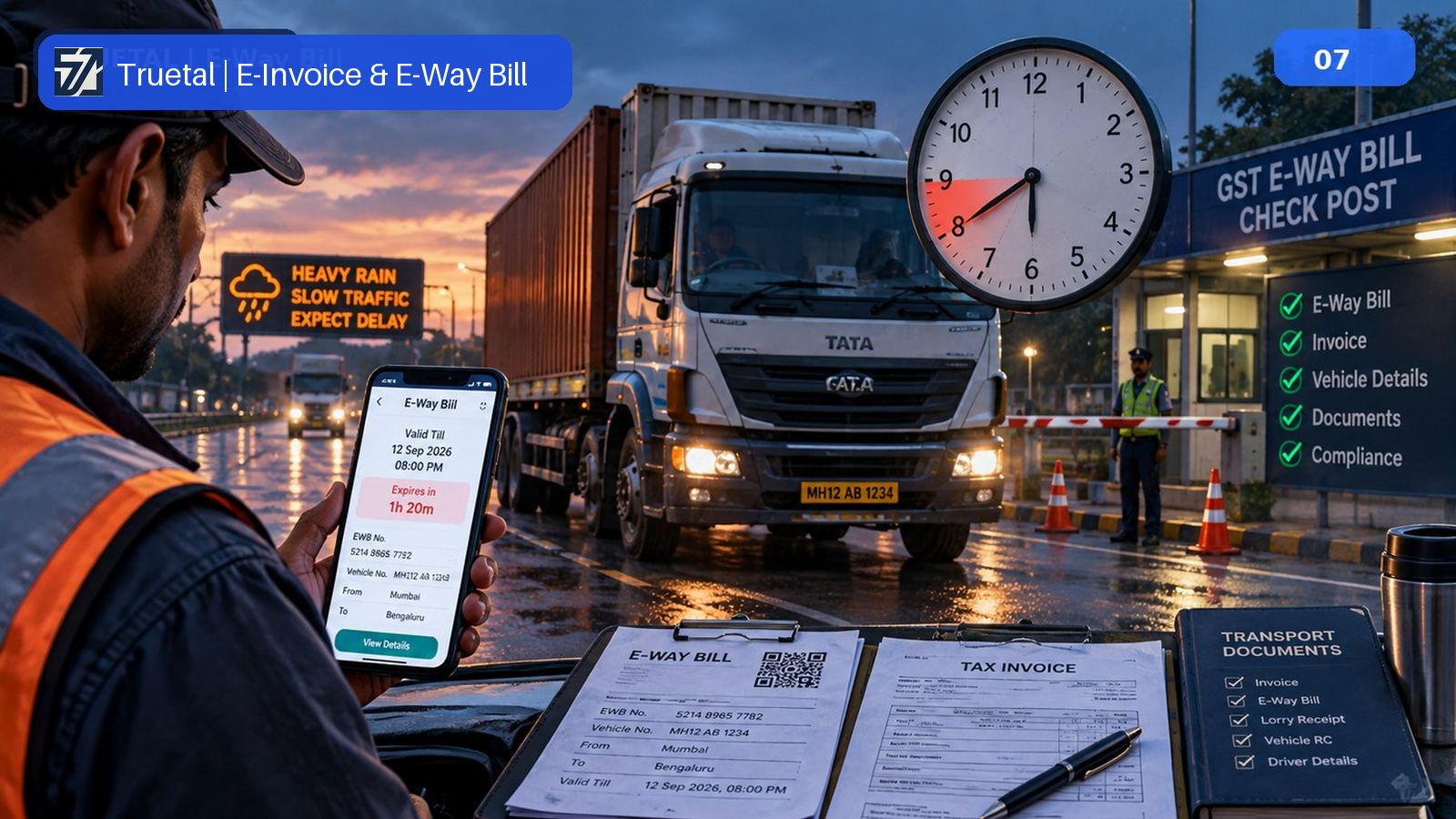
| No e-way bill was generated where required | Do not assume transit-state protection applies | The proposal expressly preserves action for missing documents |
| Goods are detained | Obtain the order/notice, note time and location, preserve evidence and respond within time | Use the law in force on the event date |
Worked example
A truck leaves Maharashtra for Karnataka with a valid invoice, e-way bill and updated vehicle details. It passes through another State and is stopped for verification.
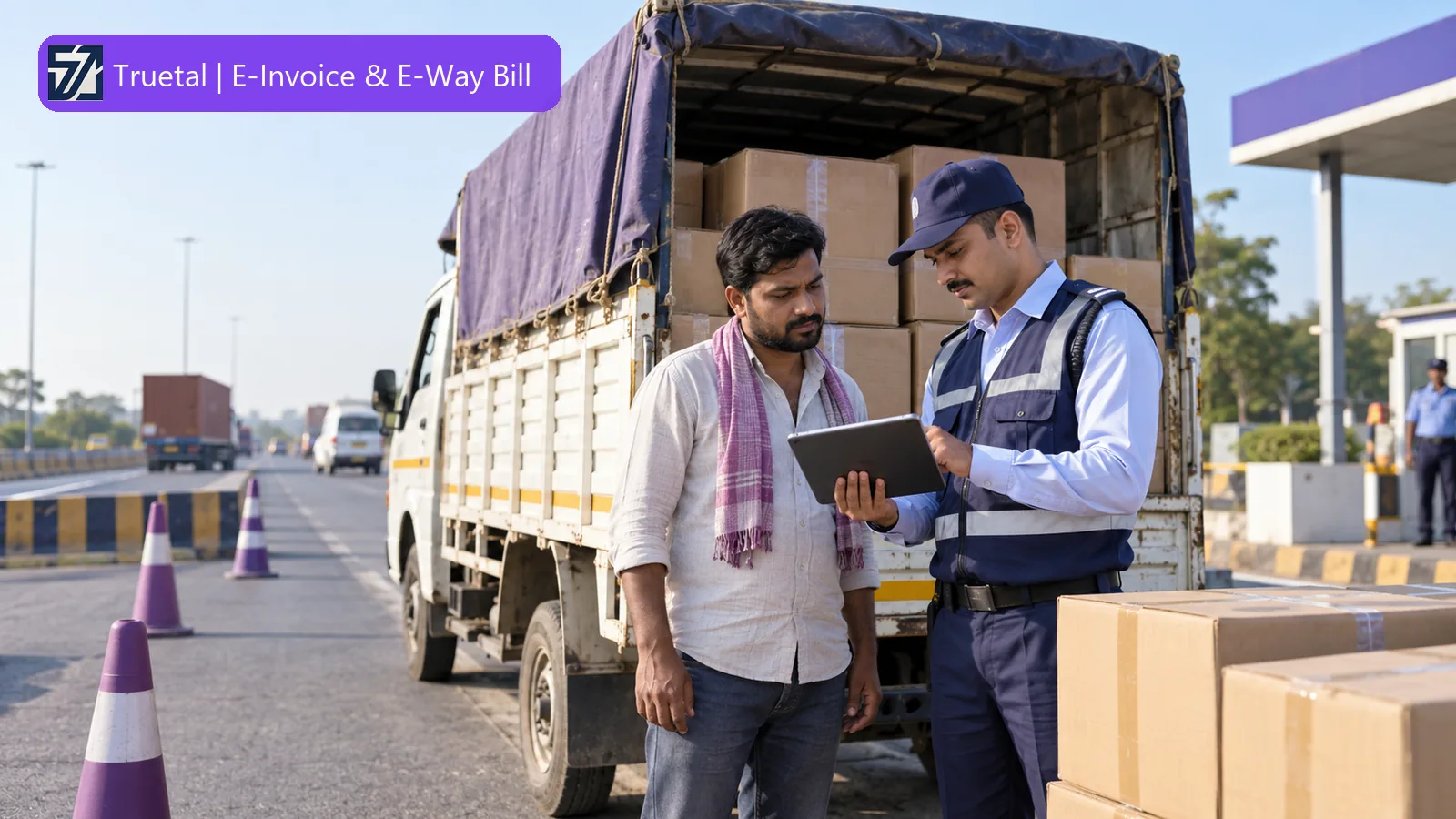
The proposed future framework may limit routine interception in a transit State and require specific intelligence plus senior authorisation. But on 9 October 2026, the driver should not announce that the officer has no power because of a Council press release. The safe response is to provide authentic documents, record the officer's name, location and time, obtain any written order or verification record, and escalate to the transporter and tax adviser.
Now change one fact: no e-way bill was generated even though one was required. The Council's own recommendation says the jurisdictional protection would not prevent inspection, detention or seizure in a missing-document case.
Dispatch evidence checklist
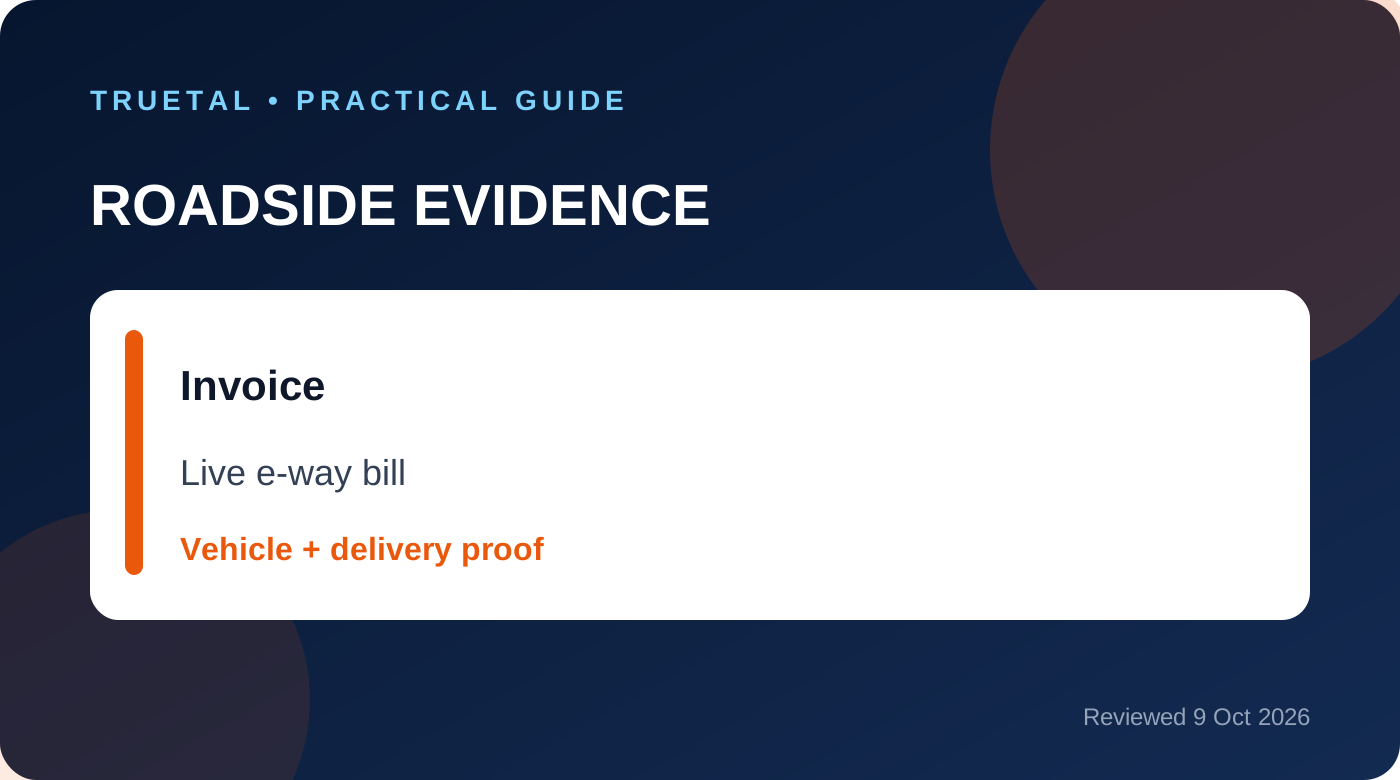
- Tax invoice, bill of supply or delivery challan, as applicable.
- Valid e-way bill and QR/code details that can be verified.
- Correct Part-B, vehicle and transporter details.
- Purchase order or customer instruction supporting the route and destination.
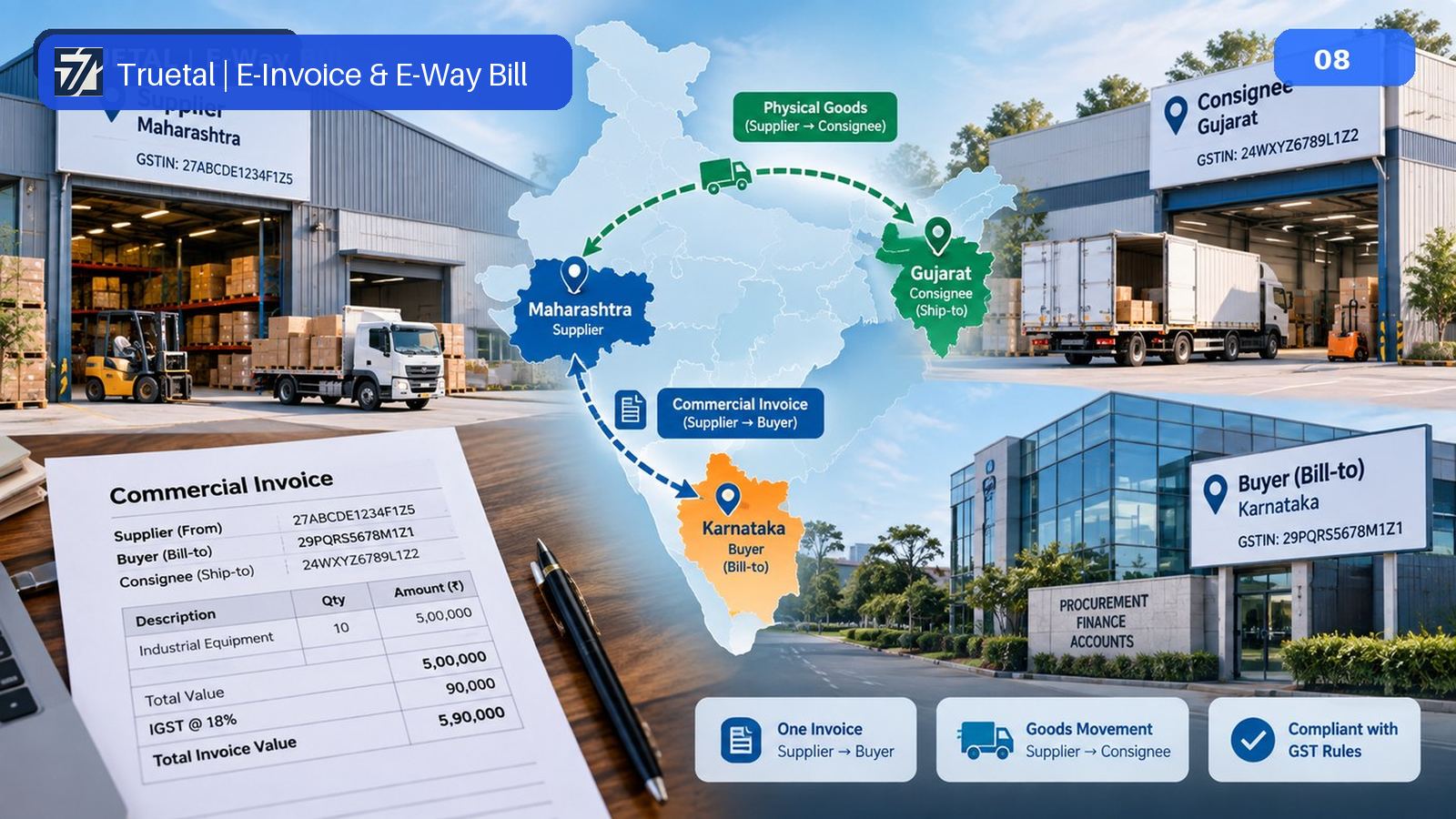
- Bill-to/ship-to explanation where the commercial and delivery parties differ.
- Transshipment, breakdown or vehicle-change evidence where relevant.
- Driver contact, transporter LR and dispatch timestamp.
- Delivery acknowledgement at the destination.
- Written interception, verification, detention or release documents.
Common mistakes
- Treating a recommendation as a defence already in force.
- Generating or altering documents after interception to create a false timeline.
- Assuming a valid invoice cures a missing mandatory e-way bill.
- Continuing movement after expiry without checking the lawful extension route.
- Losing the written notice and relying only on the driver's recollection.
- Claiming Truetal generates e-way bills when it currently does not.
The takeaway
The proposed reforms may make transit enforcement more targeted, but accurate documents remain the first line of protection. Keep the invoice, e-way bill, movement changes and delivery proof connected. If detention occurs, preserve the record and use the law effective on that date—not a headline about what may change later.