Goods sold under an older GST rate may come back after the rate has changed. The return still belongs to the original transaction. Treating it like a brand-new sale at today's rate can create a mismatch between the credit note, the original invoice and the buyer's ITC trail.
The Short Answer
Start from the original taxable transaction and correction document rules. The credit note should preserve a traceable relationship to what is being reversed rather than pretending the return is a new sale at today’s rate.
In Plain Words
The credit note should point back to the original taxable transaction. If only part of the quantity comes back, reverse only the returned portion and keep the original tax attributes attached to that portion unless the law requires another treatment.
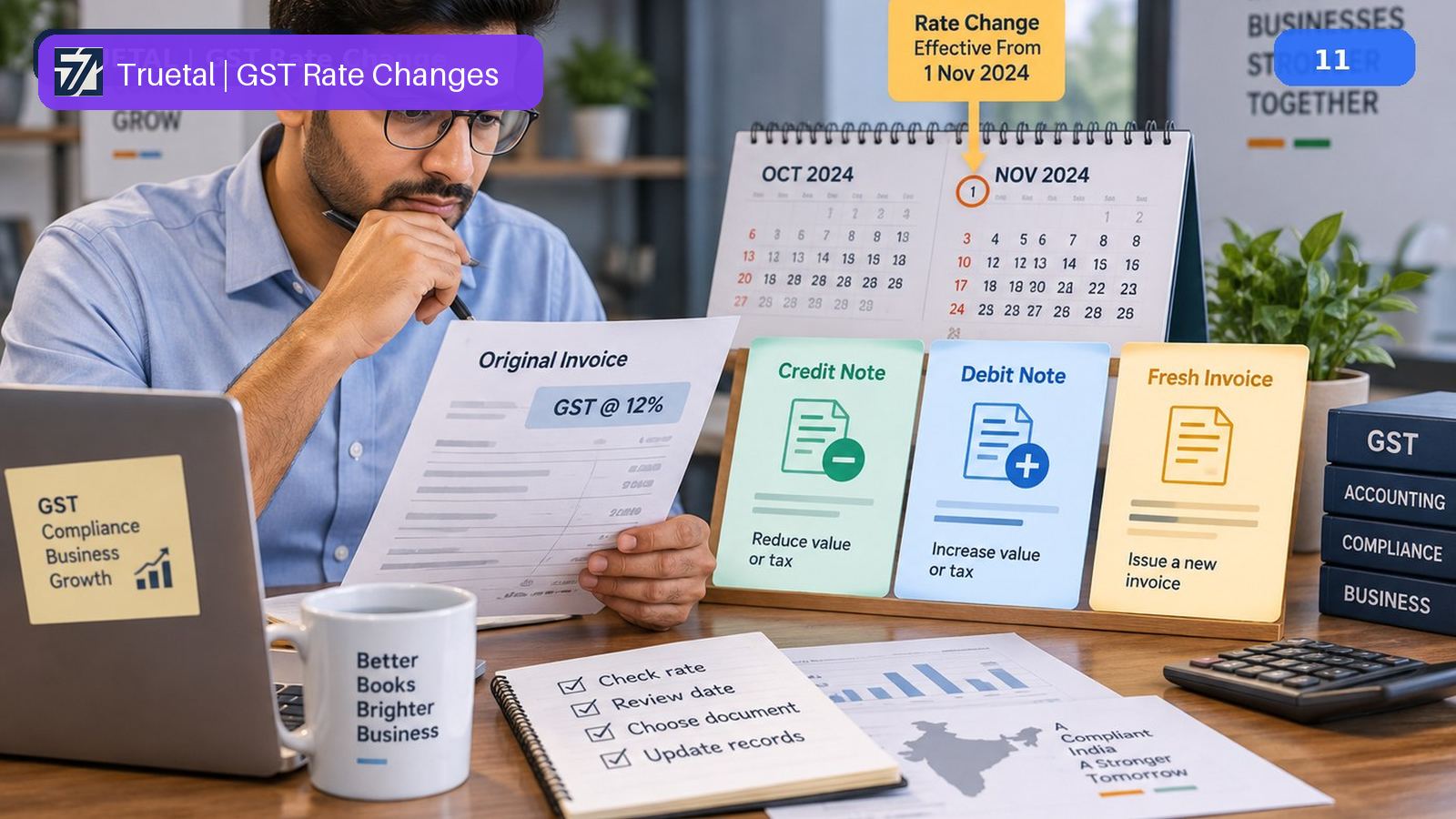
Find the original invoice and tax rate
Before issuing any credit note, locate the exact original invoice — its date, rate, and taxable value per unit. This is the baseline the credit note must reference, regardless of what the current rate happens to be on the day of the return.
Commercial return vs GST credit note
A commercial acceptance of a return is a business decision; the GST credit note is the separate compliance instrument that formalises the tax reversal for that return. Both should happen together, but don't let commercial paperwork substitute for the actual GST document.
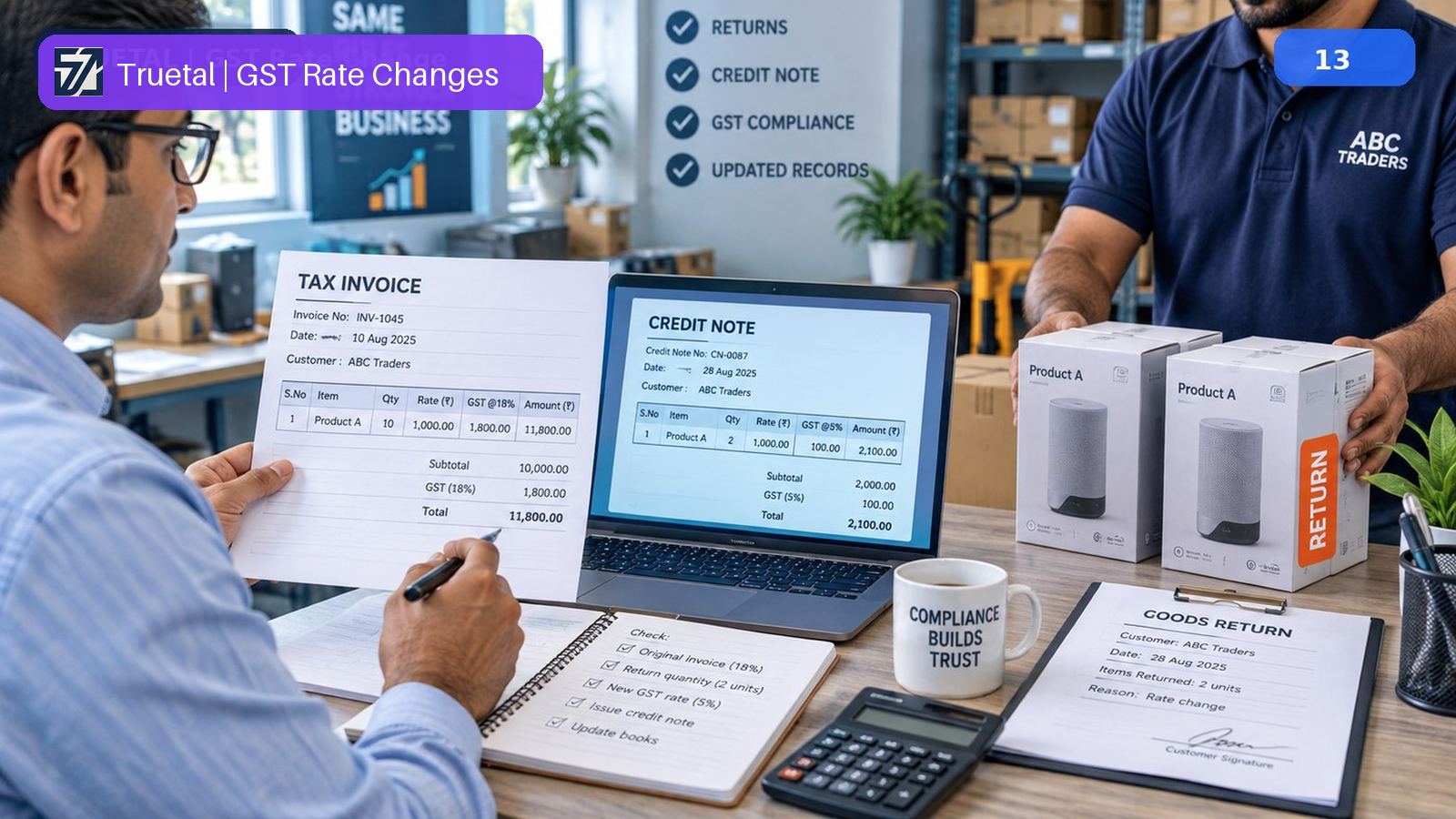
Partial quantity return
When only some units from a multi-unit invoice are returned, the credit note should cover just those units' proportional value and tax — calculated at the original invoice's rate — leaving the remaining, kept units' original tax treatment untouched.
Worked example
An original invoice for 10 units is later followed by a return of 2 units, after the GST rate has since changed. The credit note covers only those 2 units, calculated at the original invoice's rate — not today's rate. The remaining 8 units, already sold and kept by the customer, are unaffected. Any new sale happening today, even to the same customer, uses today's current rate — that's a separate transaction entirely.
Illustrative example. Actual treatment may depend on the facts and rules applicable on the transaction date.
GSTR-1 and buyer ITC impact
Report the credit note the same way as any other credit note to that customer type (Table 9B for registered recipients). The buyer's ITC should be adjusted downward to match, based on your reporting flowing through to their GSTR-2B.
Accounting: sales return, tax and inventory
Reverse the proportional sales value and tax for the returned quantity, and restore the returned goods to inventory at their original cost basis — this is a straightforward reversal of a slice of the original transaction, not a fresh entry.
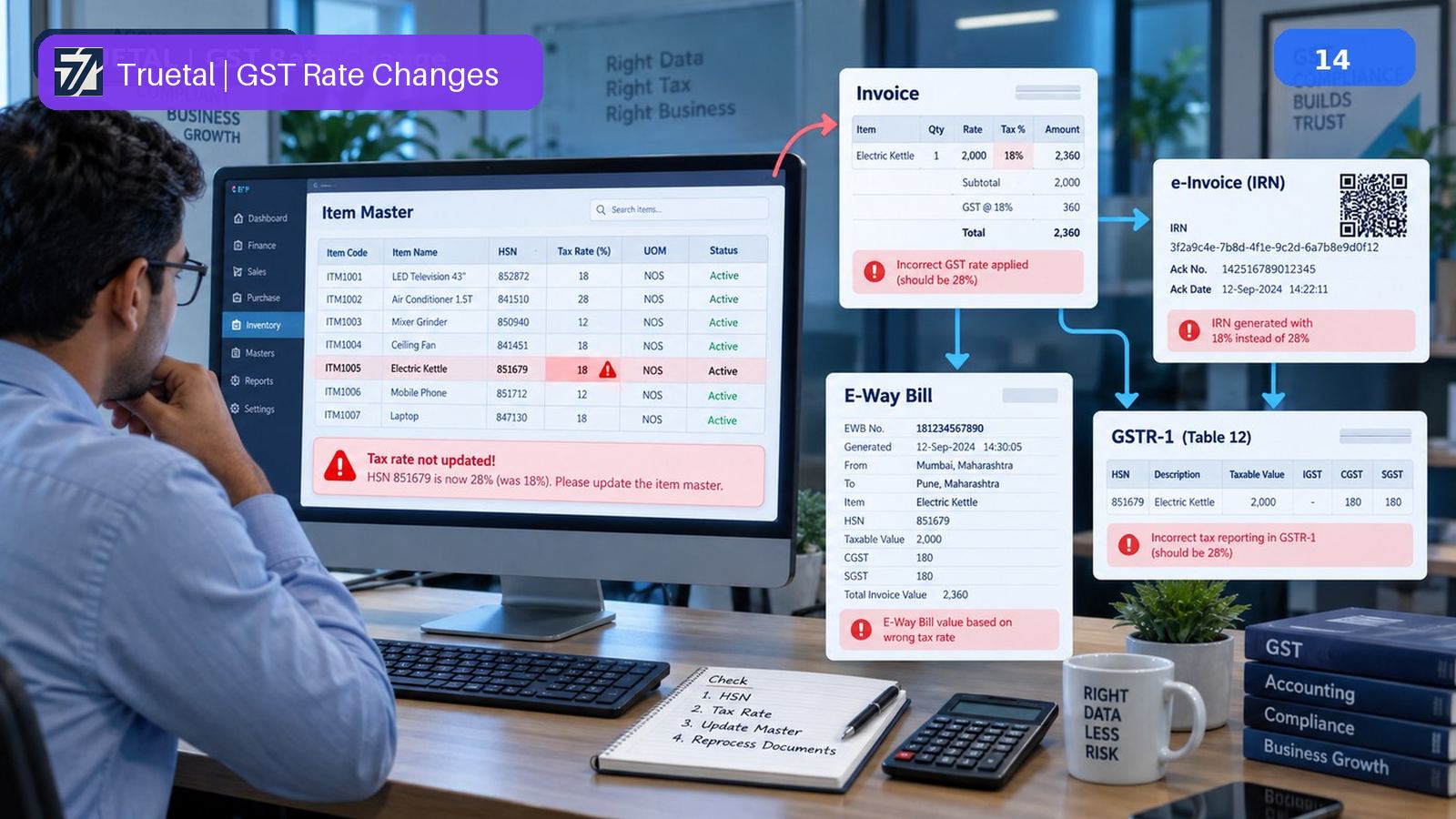
ERP rule: inherit original tax attributes by default
Configure your system so a return/credit-note workflow automatically pulls the original invoice's rate, HSN, and place-of-supply by default, rather than defaulting to "today's" values and requiring a manual override to get it right.
The Key Steps at a Glance
Read the four steps in order — each one depends on the one before it.
- 1Find the original invoice and tax rate
- 2Commercial return vs GST credit note
- 3Partial quantity return
- 4GSTR-1 and buyer ITC impact
What to do now
- Always locate the original invoice before calculating a return credit note.
- For partial returns, calculate strictly proportionally at the original rate.
- Configure your ERP to default to the original invoice's tax attributes for any return.
Common mistakes
- Calculating a return credit note at today's current rate instead of the original invoice's rate.
- Treating a partial return as if it affects the entire original invoice.
- Manually re-entering tax details for a return instead of referencing the original invoice.
The Takeaway
A sales return should remain traceable to the original sale, quantity and tax attributes. That traceability is more important than today's headline rate.
How Truetal Helps
Truetal's credit note workflow pulls every tax attribute directly from the original invoice being reversed, so a rate change in between can never silently apply to a return it shouldn't.
Questions People Search For
- Sales return after GST rate change credit note
- Credit note old GST rate after rate change
- Goods return GST rate
CBIC GST invoice rules; GST Council press release archive.