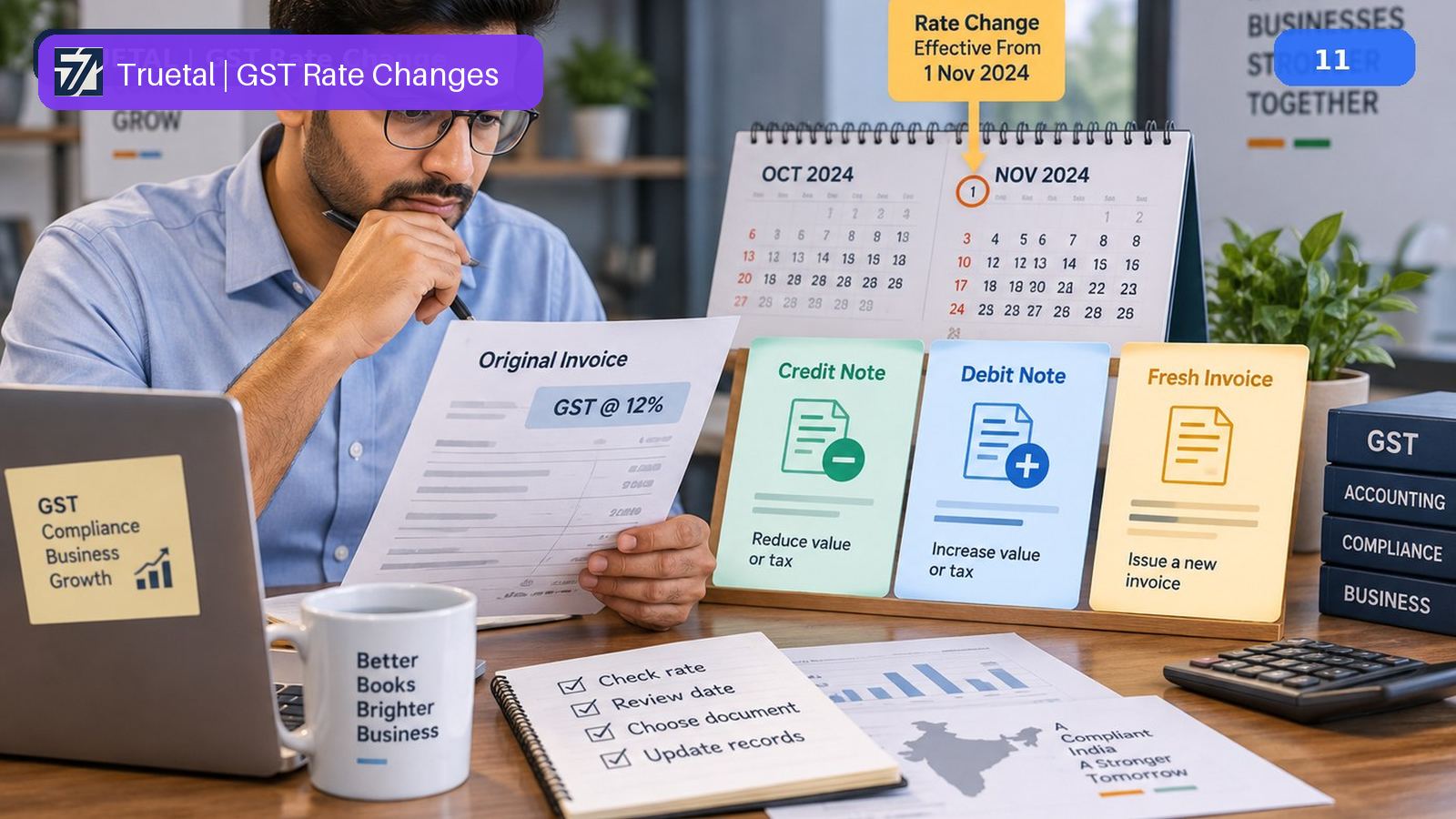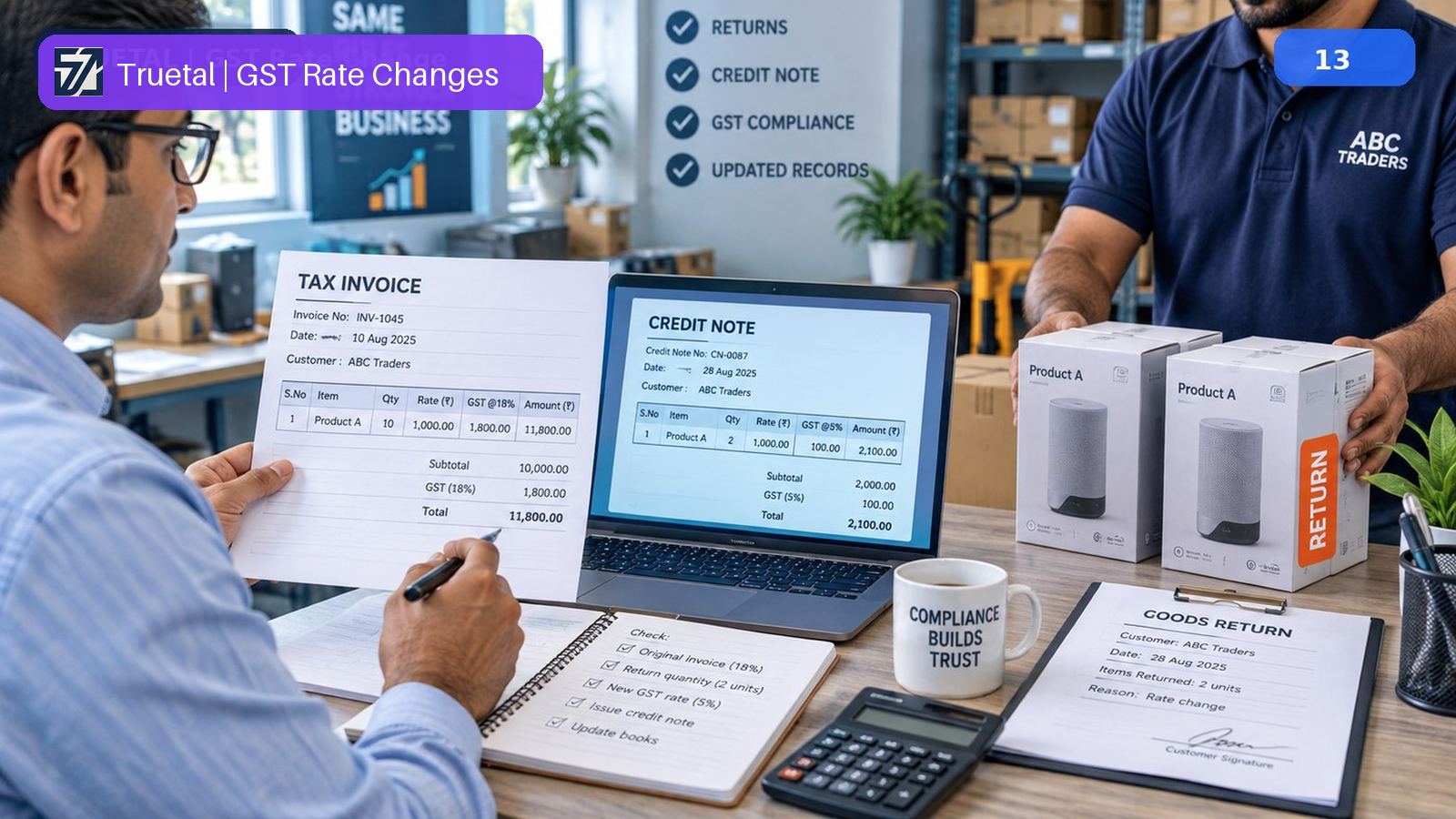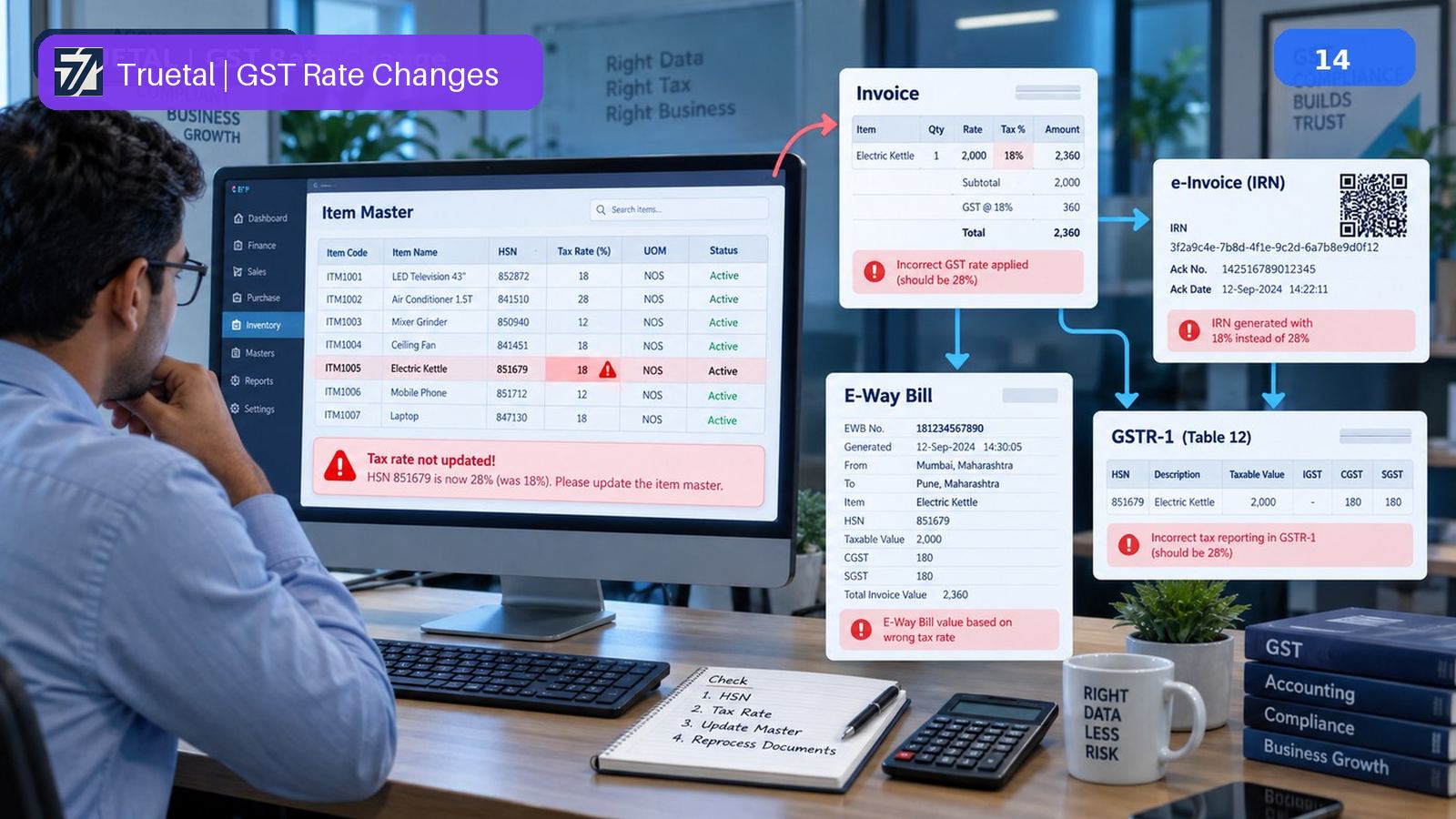
Rate-change cases become confusing when payment, supply and invoice dates fall on different sides of the effective date. Looking only at the invoice date can give the wrong answer. You need to put all three dates on one timeline before deciding the applicable treatment.
The Short Answer
Rate-change cases cannot be solved by looking only at the invoice date. Map the payment date, invoice date and supply date against the applicable time-of-supply provisions, then document the conclusion.
In Plain Words
Put payment date, supply date and invoice date on one line. The legal result comes from the applicable time-of-supply/rate-change provisions, while the accounting team should keep the conclusion and supporting dates documented so the same case is not re-decided later.
The three dates you must collect
- Payment/advance date — when money was actually received from the customer.
- Rate-change effective date — when the new GST rate legally took effect.
- Invoice/supply date — when the invoice was raised or the supply was actually completed.
Why advance treatment differs by type of supply
The time-of-supply rules can treat goods and services differently, and can treat an advance differently depending on the specific supply type and any applicable notification. This is exactly why a single, universal "advance always locks the old rate" rule is unsafe to apply blindly — the correct answer depends on the specific provisions applicable to your transaction.
Build a time-of-supply timeline
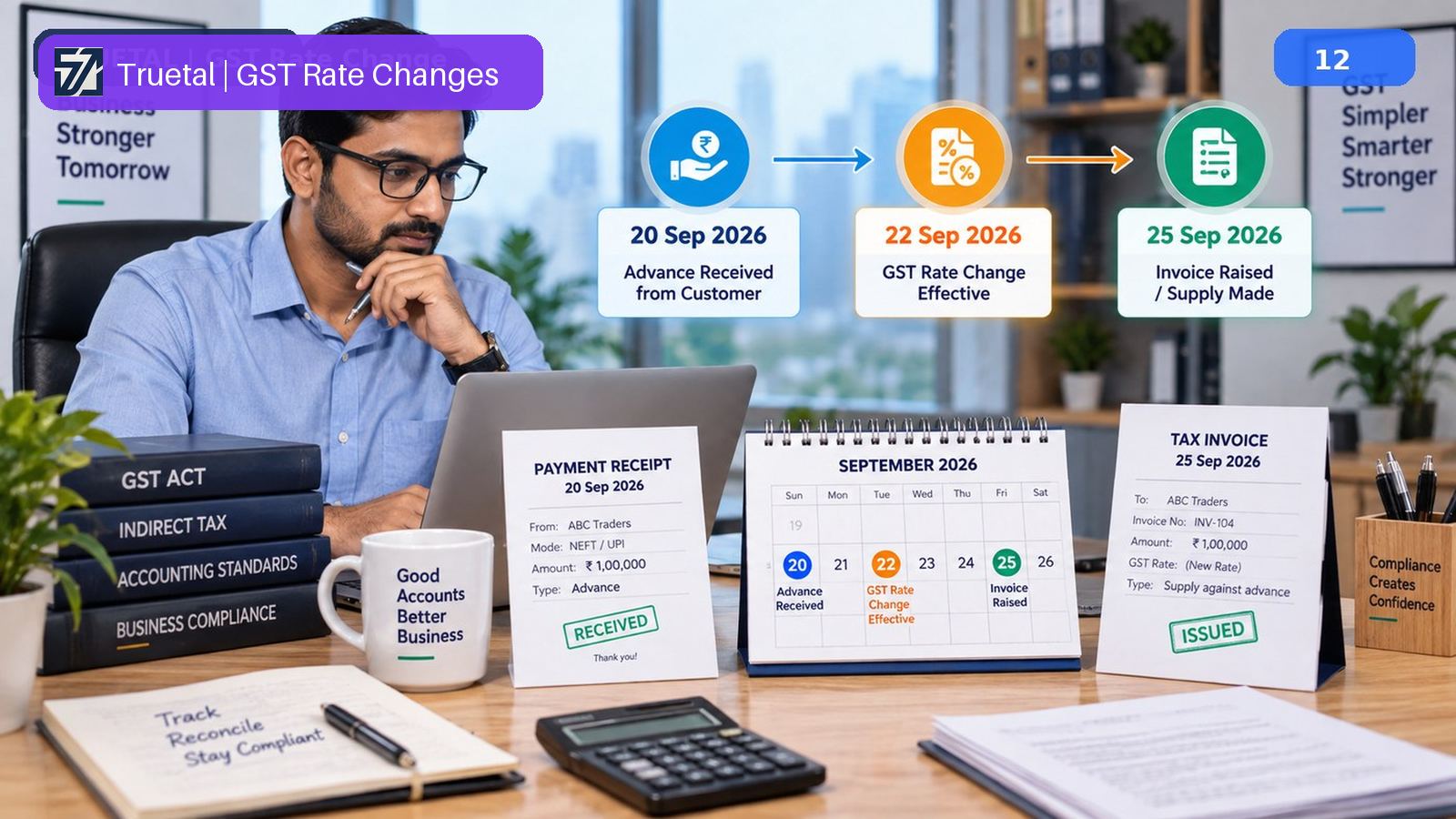
For any transaction spanning a rate change, lay out the three dates on a simple timeline before making any tax decision. This makes it immediately obvious whether the advance, the rate change, or the invoice date came first — and which time-of-supply rule set actually applies to that sequence.
Worked scenario
Payment received 20 September; rate change effective 22 September; invoice raised and supply completed 25 September. Before applying either the old or new rate, confirm which of the applicable time-of-supply provisions governs an advance received before a rate change for your specific supply type — this determines the outcome, not a general assumption.
Illustrative example. Actual treatment may depend on the facts and rules applicable on the transaction date.
Accounting entry and tax adjustment
Once the correct rate is confirmed, book the advance liability at that rate from the outset if possible, or adjust at invoice time if the advance was initially recorded provisionally. Keep a note in your records explaining which time-of-supply provision was applied and why, so the treatment is defensible later.
ERP validation: store rate-effective dates
Your invoicing system should store the effective date of every rate change as data, not a hard-coded assumption, and should flag any transaction where advance date, rate-change date and invoice date don't all fall on the same side of a rate change — these are exactly the transactions that need a manual time-of-supply check.
The Key Steps at a Glance
Read the four steps in order — each one depends on the one before it.
- 1The three dates you must collect
- 2Why advance treatment differs by type of supply / rule
- 3Build a time-of-supply timeline
- 4Worked scenarios: payment before, invoice after
What to do now
- Build the three-date timeline for every transaction spanning a rate change before invoicing.
- Confirm the specific time-of-supply rule for your supply type rather than assuming a general pattern.
- Document the conclusion and the rule applied, for audit defensibility.
Common mistakes
- Applying the invoice date's rate without checking whether an earlier advance changes the analysis.
- Assuming the same time-of-supply logic applies uniformly to goods and services.
- Not documenting which rule was applied, leaving the decision unexplained later.
The Takeaway
Three dates beat one assumption. Put payment, supply and invoice dates on a timeline before deciding the rate.
How Truetal Helps
Truetal flags any transaction where payment, rate-change and invoice dates straddle a notified rate change, so it gets a manual review instead of an automatic — and possibly wrong — rate assignment.
Questions People Search For
- Advance received before GST rate change which rate
- GST time of supply rate change advance
- Invoice after GST rate change advance
GST Council press release archive; CBIC GST invoice rules. This scenario is legally nuanced — verify the precise time-of-supply outcome for your transaction type before relying on it.