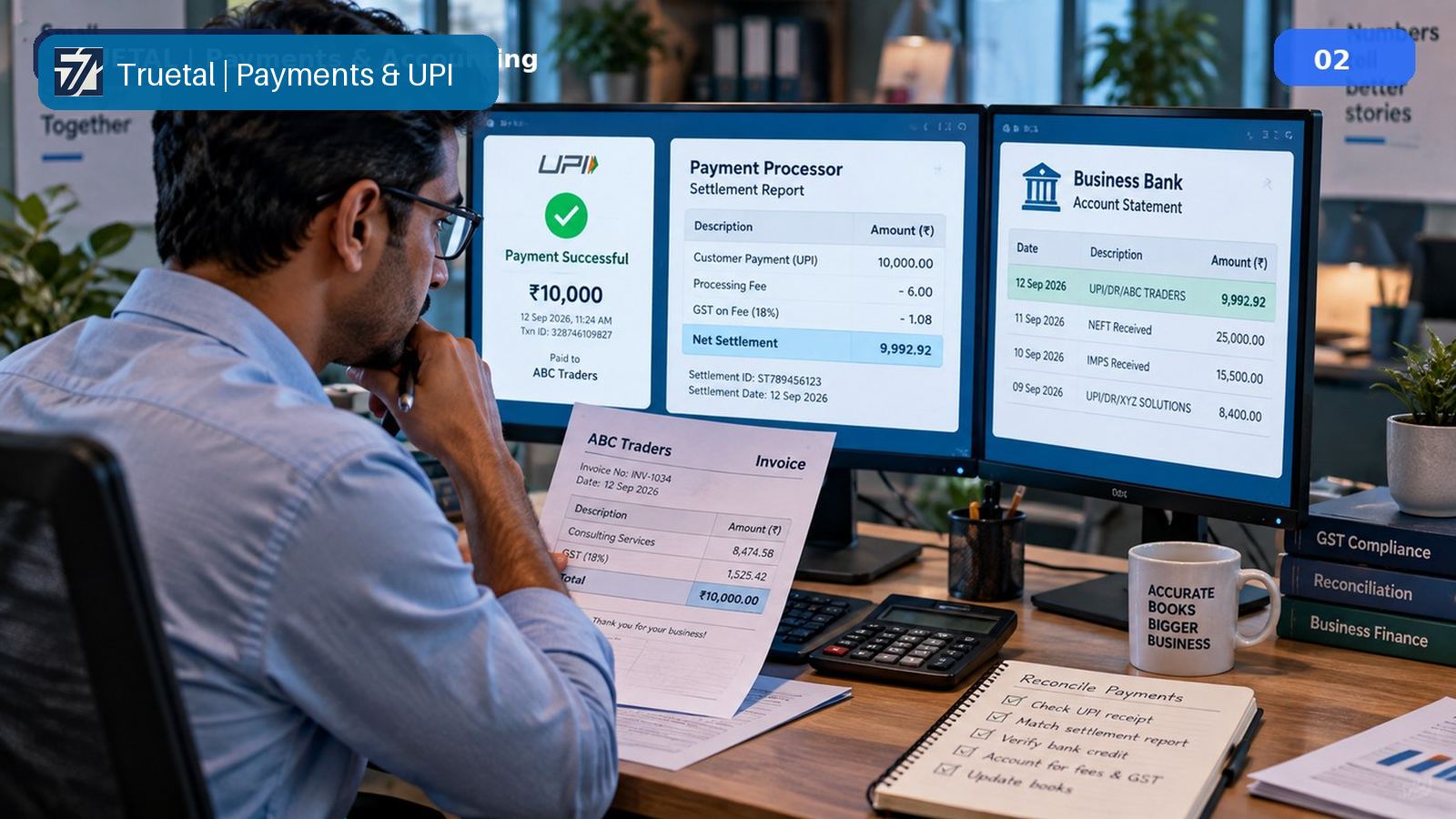

A spreadsheet marked “paid/unpaid” breaks as soon as a customer makes a partial payment, one receipt covers several invoices, a credit note reduces the balance or a bank credit cannot be identified.
That is why this guide starts with the decision, not the form. The goal is to leave you with a short evidence list, a clear owner and a next action that does not overstate what software or a portal screen can decide.
The Short Answer
Track receivables at invoice and payment-allocation level. Each invoice needs customer, date, due date, original amount, approved credits, receipts, outstanding balance, ageing bucket, dispute status, last follow-up and next action. Match bank cash separately and never mark an invoice paid merely because a similar amount reached the account.
Last reviewed: 30 September 2026. Due dates, portal validations and notification-based exceptions can change. Verify the live portal and current primary source before acting.
In Plain Words
Use one owner and next date for every overdue item. Separate collection status from accounting status: promised, disputed, partially paid and bank-unmatched are different queues. Preserve the original invoice and every allocation instead of overwriting the total.
Use three separate columns in your working: what your books say, what the GST system says, and what the law or current official guidance requires. Those columns often overlap, but they are not interchangeable. Keeping them separate prevents a software status or portal total from becoming an unsupported tax conclusion.
Why This Problem Happens
Teams usually begin with a remembered threshold, a dashboard number or a message from another party. The underlying evidence arrives later and may tell a different story. Names, GSTINs, periods, document numbers, State rules, amendments and timing can each change the answer.
The practical fix is a repeatable review trail. Record the source, the period, the exception, the person responsible and the evidence that closes it. If a fact changes later, update the working rather than silently rewriting history.
The Decision Framework
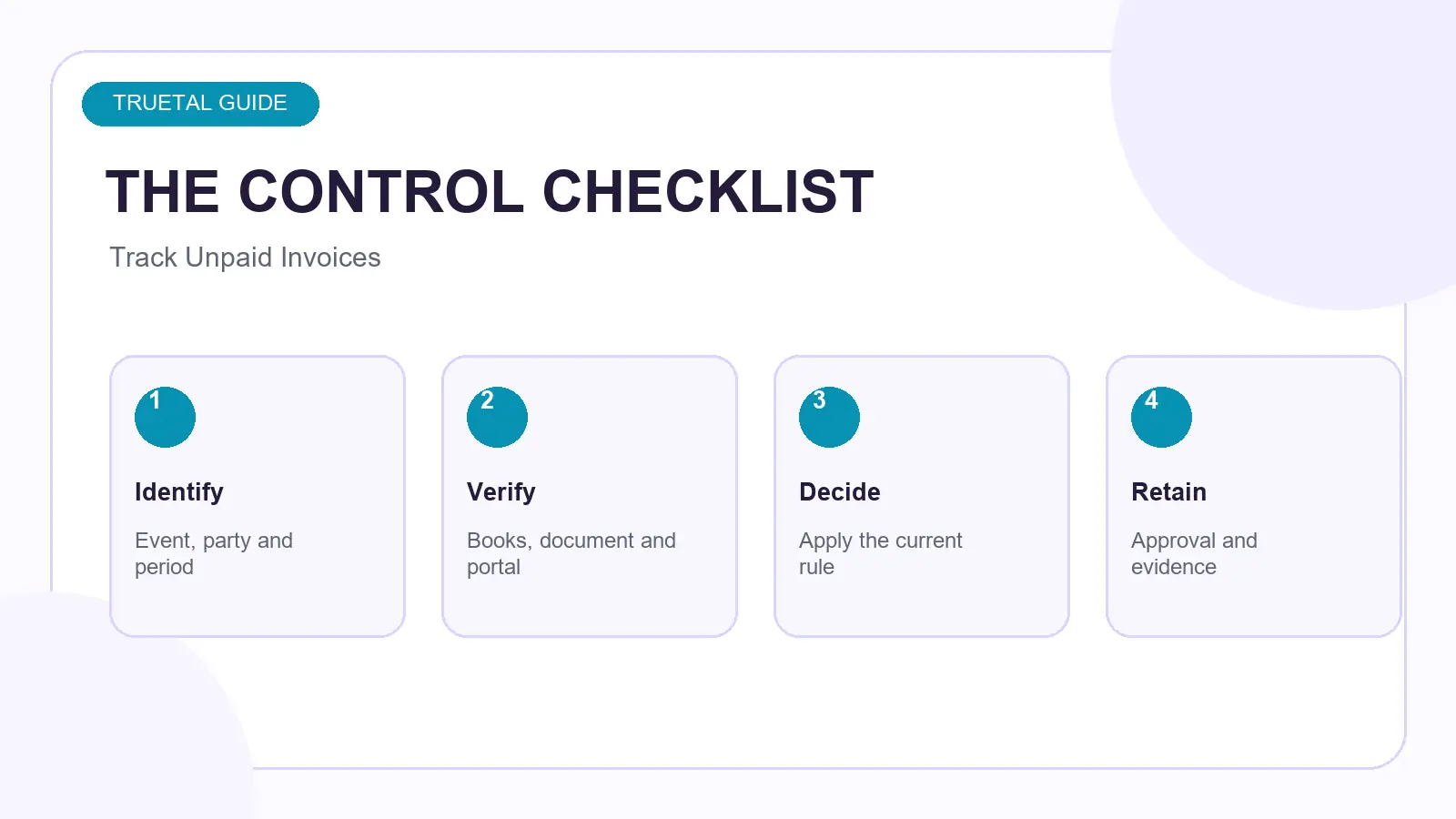
- Identify the event. What registration, return, invoice, movement, payment or notice is actually in question?
- Fix the period and parties. Confirm GSTIN, PAN, State, counterparty and relevant tax period.
- Compare the evidence. Put source documents, books and portal data side by side.
- Apply the current rule. Use the official source linked below and record any exception.
- Approve and retain proof. Keep the working, submission and acknowledgement together.
Step-by-Step Checklist
- Record due date and terms when the invoice is created. Add the supporting record to the working and assign a named owner before moving to the next step.
- Allocate each receipt to specific invoices. Add the supporting record to the working and assign a named owner before moving to the next step.
- Review ageing, disputes and unmatched bank credits weekly. Add the supporting record to the working and assign a named owner before moving to the next step.
- Log contact, promise date and next action until the balance is zero. Add the supporting record to the working and assign a named owner before moving to the next step.
Do not mark a step complete because someone says it was done. Mark it complete when the relevant source document, portal evidence or approval is attached.
Worked Example
A ₹1,18,000 invoice receives ₹70,000. The invoice remains open for ₹48,000, the receipt is linked, ageing applies to the residual balance and the next follow-up reflects the customer’s promise. A second ₹48,000 bank credit closes it only after confirmed allocation.
The numbers and names in this example are illustrative. The control is the important part: preserve the original record, explain the difference and record the authorised decision. That creates a file another accountant or officer can follow without guessing.
Documents and Evidence to Keep
- invoice and terms
- payment/allocation ledger
- bank evidence
- credit notes and disputes
- follow-up history
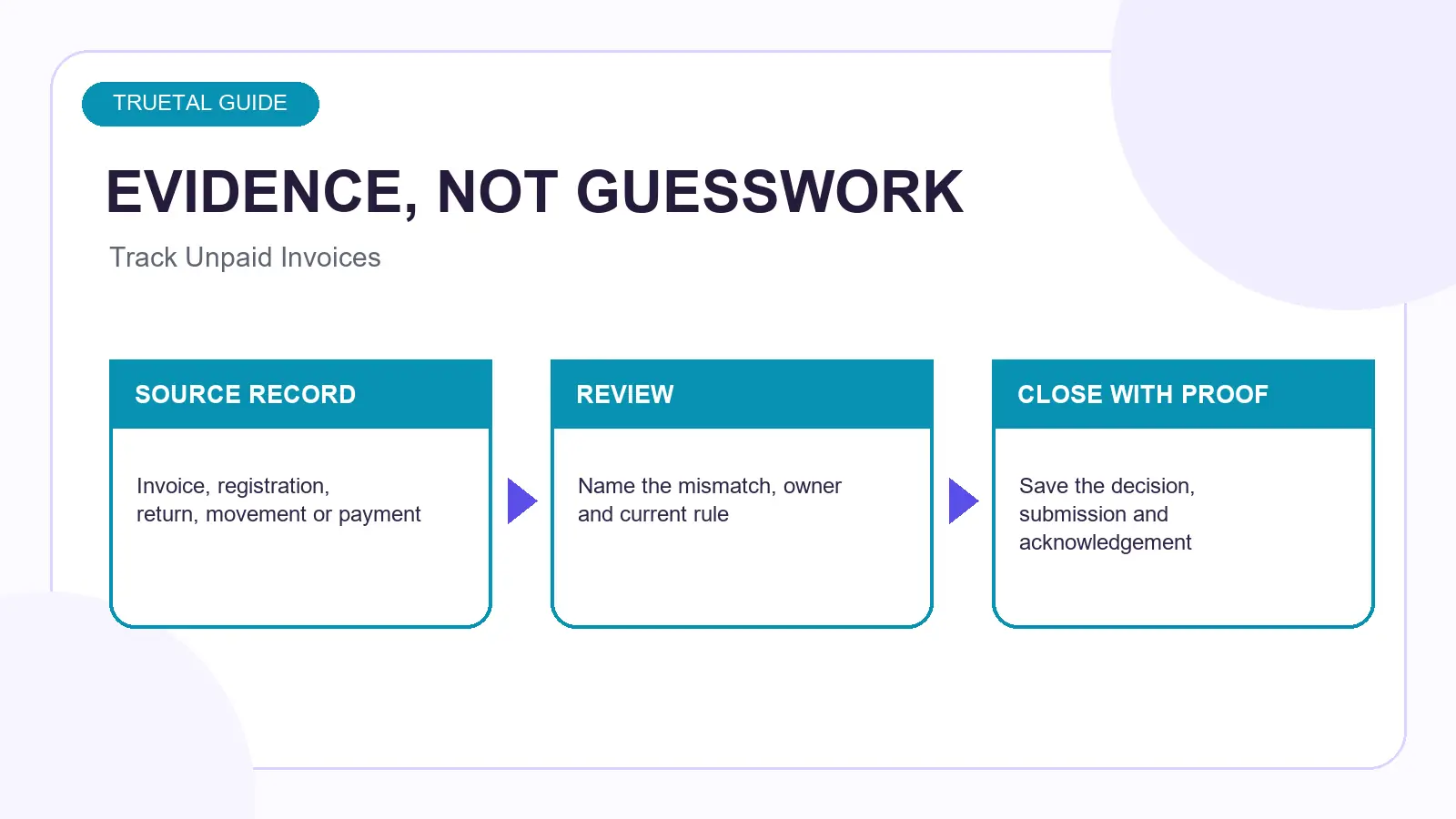
Keep the final submission or action proof beside this pack. A screenshot without the underlying source, or a source document without the filed acknowledgement, leaves half an audit trail.
Exceptions and Edge Cases
The answer can change where there are several GST registrations under one PAN, supplies across States, exports, e-commerce operators, reverse charge, amendments, credit notes, cancelled documents or a portal notice. Treat each as a separate branch in the working.
When two official pages appear inconsistent, prefer the later notification, circular or current portal manual and record the date checked. Old official FAQs can remain online after a rule or system validation changes.
Common Mistakes
- using a single paid checkbox
- closing on a similar bank amount
- losing partial-payment history
- sending the same reminder to disputed and undisputed invoices
These mistakes share one pattern: a conclusion is made before the evidence is reconciled. Slow down at the decision point, not after submission.
How Truetal Helps — and Where It Stops
Truetal connects invoices, partial payments, outstanding balances, follow-up history, bank matching and accounting reports in one traceable workflow.
Automation proposes and organises work; payment terms, write-offs, disputes and accounting treatment still need an authorised human decision.
That boundary is deliberate. Software should organise evidence, highlight exceptions and preserve decisions; it should not invent legal certainty or silently post a tax-affecting conclusion.
FAQ
What should I check first: Track Unpaid Invoices?
Record due date and terms when the invoice is created. Start with the source facts and the current official portal or notification. A headline threshold or a verbal assurance is not enough when the answer depends on entity, period, State, document type or transaction flow.
Which records should I keep?
Keep invoice and terms, payment/allocation ledger, bank evidence, plus the final acknowledgement, working and approval. Records should show what the business knew, what decision it made, who approved it and what was finally submitted or changed.
What is the most common mistake?
A common mistake is using a single paid checkbox. The safer control is to preserve the source record, name the precise exception and close it with evidence rather than changing a number simply to make two totals agree.
How does Truetal help?
Truetal connects invoices, partial payments, outstanding balances, follow-up history, bank matching and accounting reports in one traceable workflow. Automation proposes and organises work; payment terms, write-offs, disputes and accounting treatment still need an authorised human decision.
The Takeaway
Start with the source record, separate books from portal data, apply the current rule and close the exception with proof. Set Up Payment Follow-ups when you are ready to turn the issue into a controlled next step.
Related Reading
- Outstanding Receivables: How to Reduce Delayed Customer Payments
- Bank Statement to Accounts Receivable: How Partial Payments, UPI References and FIFO Matching Should Actually Work
- Customer Paid ₹10,000 by UPI but Bank Credited Less: The Correct Accounting and GST Reconciliation
- Explore Truetal’s connected business workflows
- Talk to the Truetal team about your workflow
Sources
- CBIC — GST accounts and records rules
- Ministry of MSME — MSME Samadhaan delayed-payment portal
- RBI — Trade Receivables Discounting System FAQs
This is general information, not legal or tax advice. Verify the facts, effective date and current notification for your business before acting.