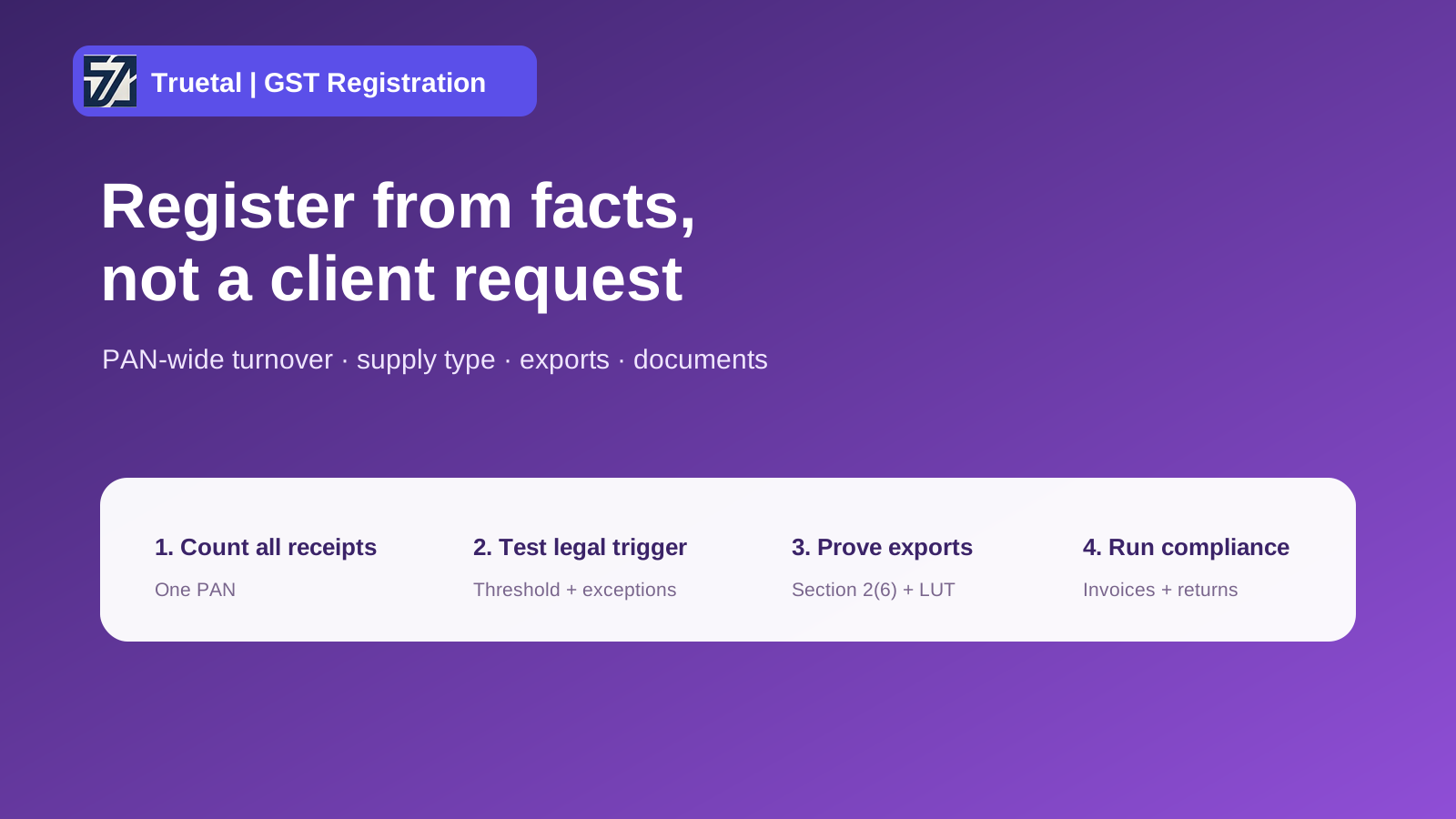
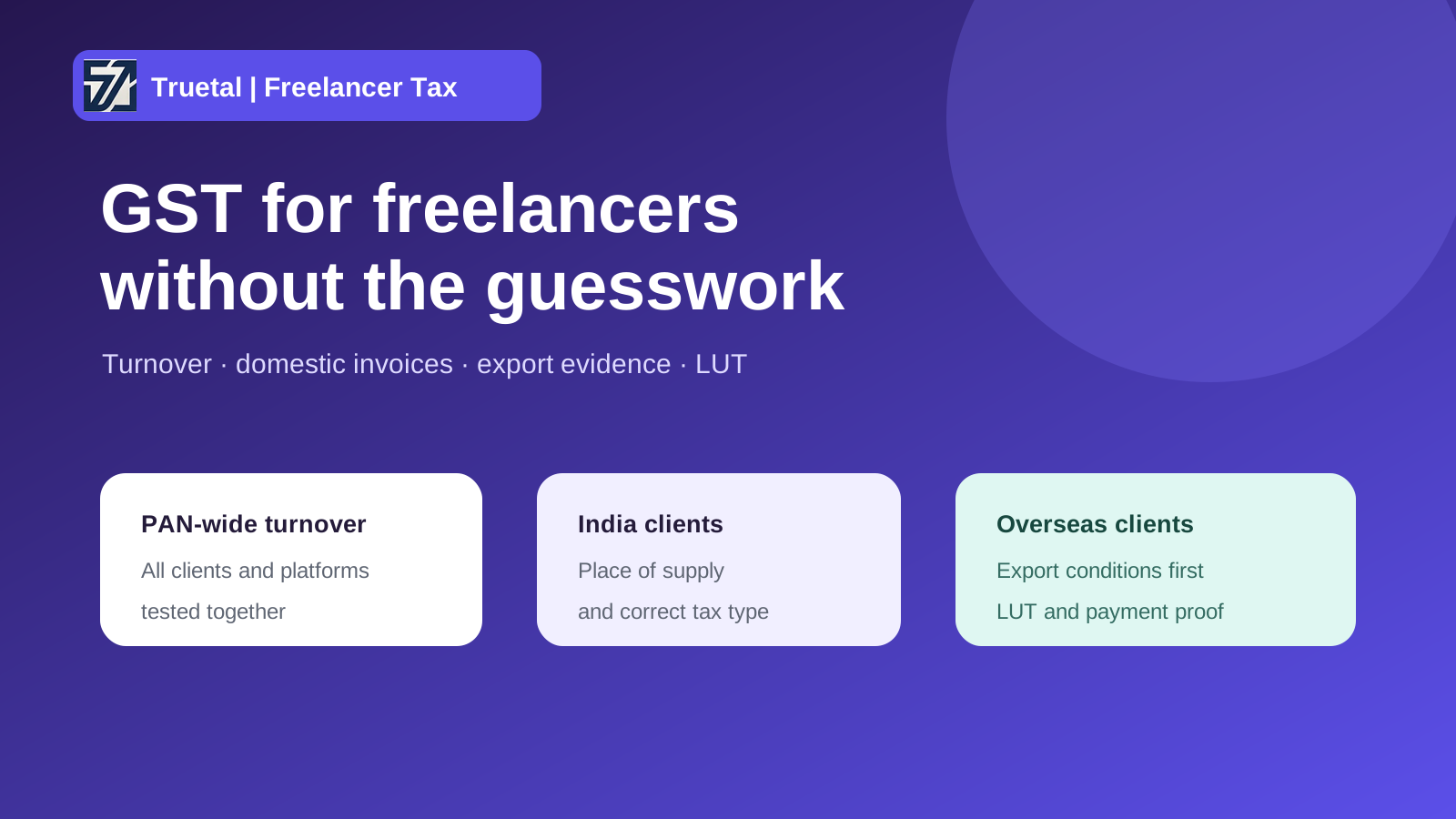
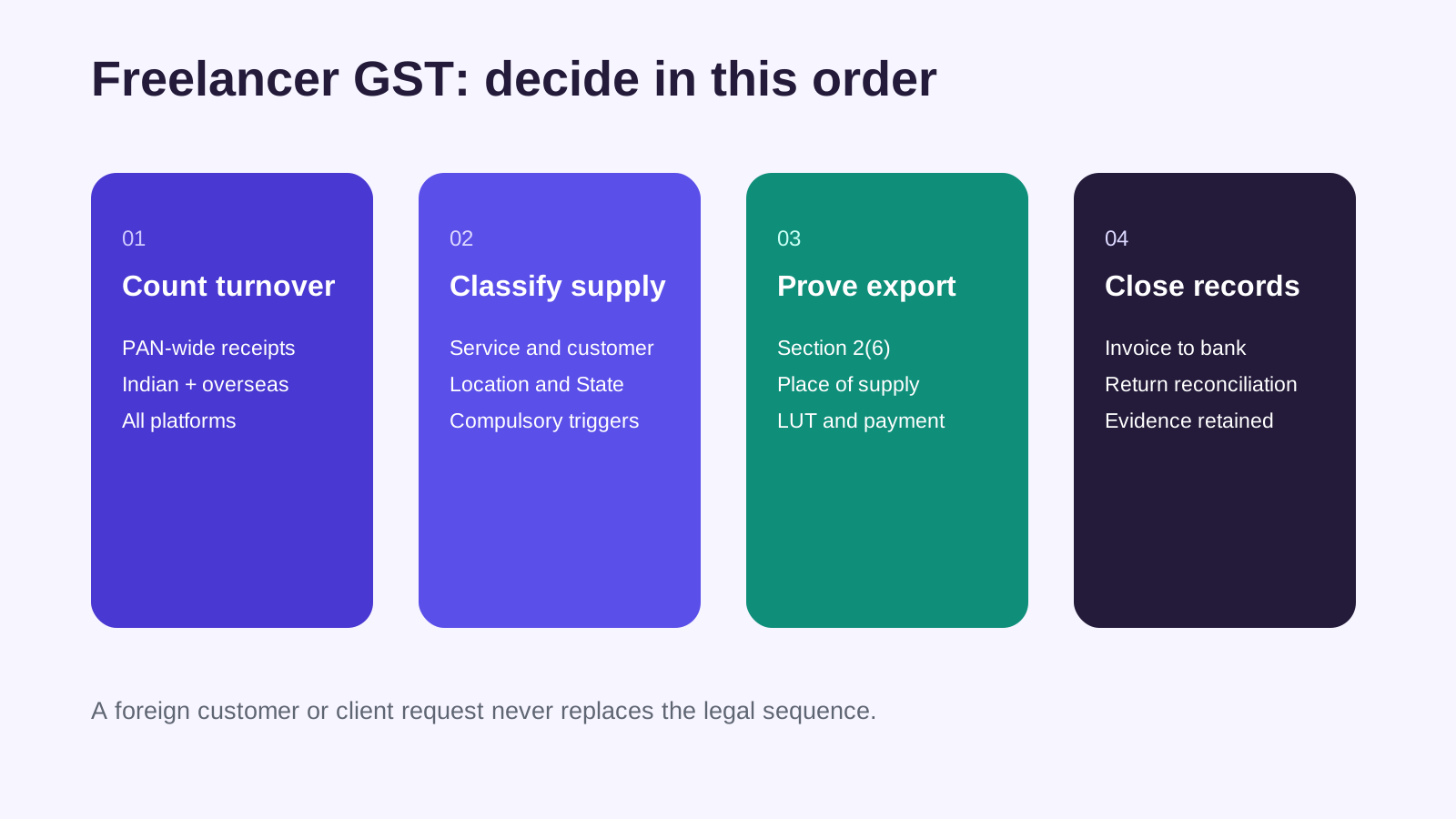
A freelancer does not become liable for GST merely because a client asks for a GST invoice, and an overseas client does not automatically make every receipt a zero-rated export. Start with the legal tests: aggregate turnover, the State from which services are supplied, any compulsory-registration trigger, and—where the client is outside India—every condition in the export-of-services definition.
The direct answer
For most freelancers supplying taxable services, the ordinary registration threshold is based on PAN-wide aggregate turnover: generally ₹20 lakh, with a lower threshold in specified special-category States. Notification 10/2017-Integrated Tax provides threshold relief for many inter-State suppliers of taxable services, so the old statement that every inter-State service requires immediate registration is too broad. Separate compulsory-registration rules and the exact nature of the supply still matter.
Once registered, the freelancer must follow the registered-person workflow: issue compliant invoices, charge the correct CGST/SGST or IGST where tax is payable, file applicable returns, reconcile receipts and preserve evidence. Services qualifying as exports are zero-rated, but only if all statutory conditions are met.
First decide what you actually supply
“Freelancer” is a working arrangement, not a GST classification. A designer, software developer, consultant, trainer, commission agent and marketplace seller can have different place-of-supply and registration consequences.
Prepare one list of every revenue stream with the customer location, contract, service description, invoice currency, payment route and annual value. Add receipts from all businesses under the same PAN when testing aggregate turnover; do not test each platform or trade name separately.
Domestic clients
For a normal taxable service supplied within the same State, a registered freelancer generally charges CGST and SGST. An inter-State taxable service generally attracts IGST. The place-of-supply rules determine which case applies; the customer’s billing address alone is not always conclusive.
An unregistered freelancer should not collect GST as though registered. A client asking for “GST extra” does not create a GSTIN. If liability arises, apply through the official registration process and agree how contracts will treat tax from the effective date.
Overseas clients and export of services
An overseas payment is not enough by itself. Section 2(6) of the IGST Act tests the supplier location, recipient location, place of supply, permitted receipt of consideration and whether the parties are merely establishments of the same person. Intermediary and other special place-of-supply rules can change the answer.
Where the supply genuinely qualifies as an export, it is zero-rated. A registered exporter may commonly supply under a valid LUT without payment of IGST or use the permitted payment-and-refund route. The GST Portal requires a fresh LUT selection for the relevant financial year. Keep the contract, invoice, LUT, foreign-inward-remittance/payment evidence and working that supports the place of supply.
Worked example
Meera is a Bengaluru-based independent UX consultant. During the financial year she earns ₹12 lakh from Indian clients and ₹11 lakh from a customer in Singapore. She must test aggregate turnover using the complete ₹23 lakh rather than only the domestic ₹12 lakh.
She then reviews each supply separately. Her Indian invoices require the domestic/inter-State tax analysis. For the Singapore engagement she checks the written recipient, place of supply, relationship between the parties and receipt conditions before treating it as export. If it qualifies and she supplies without IGST, she keeps the applicable LUT and export evidence with the invoice.
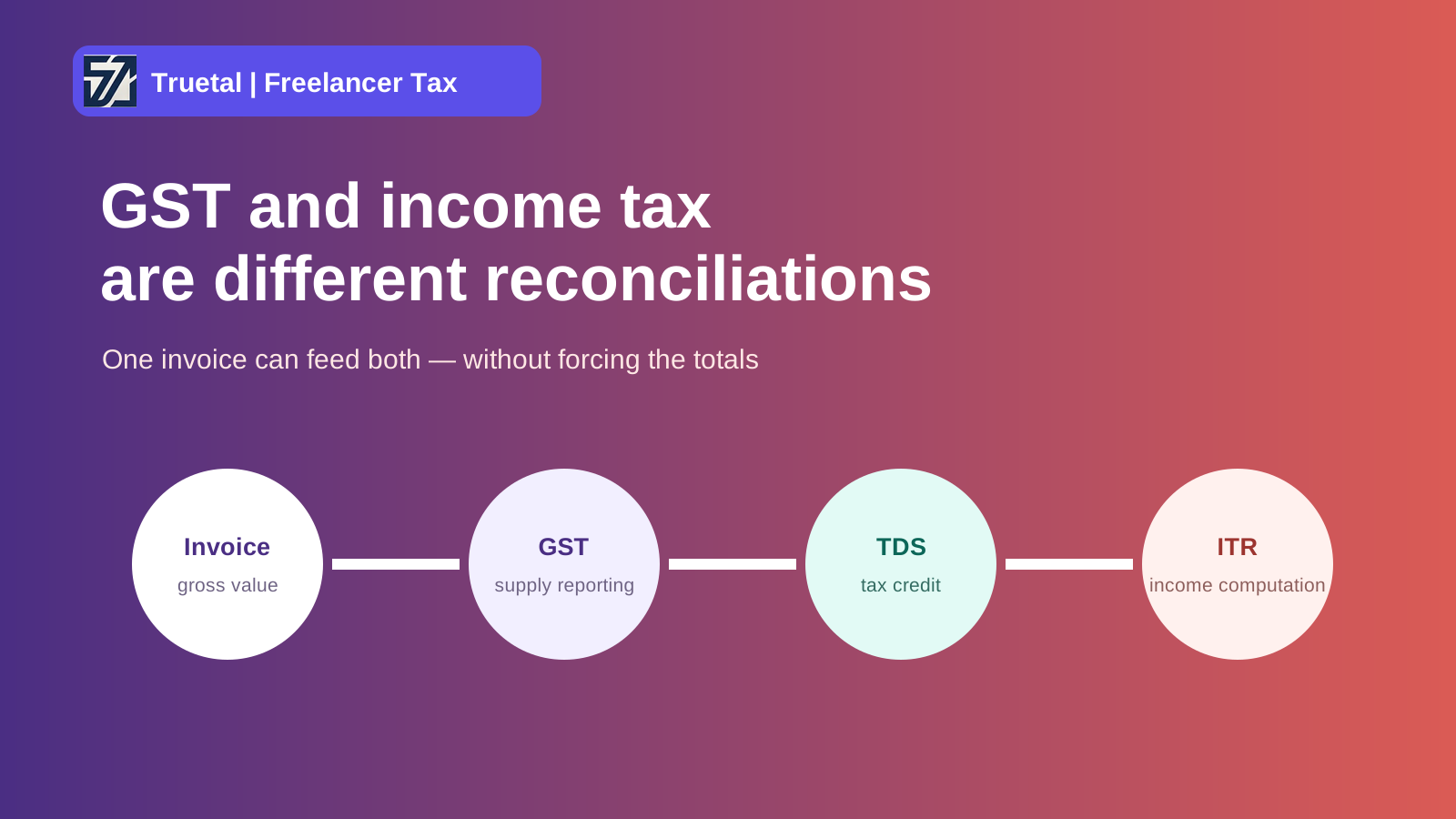
The accounting file records the invoice at its full value and matches the later bank receipt. Exchange differences and bank charges are separate accounting events; they should not overwrite the original invoice.
Monthly records checklist
- Contracts and statements of work for every client.
- Sequential invoices, including export endorsements where applicable.
- Customer GSTIN and place-of-supply evidence for registered Indian clients.
- LUT acknowledgement and financial year where exports are made without IGST.
- Bank receipt, remittance advice and permitted foreign-currency/INR evidence.
- Expense invoices separated into business use, personal use and ITC-review buckets.
- Sales register reconciled with GST returns and bank receipts.
- Open invoices, credit notes, advances and cancelled documents.
Common mistakes
- Looking only at one platform’s receipts instead of PAN-wide aggregate turnover.
- Assuming every foreign client engagement is an export of services.
- Collecting GST before registration or using another person’s GSTIN.
- Treating an LUT as proof that the underlying service satisfies the export definition.
- Posting the net bank credit as revenue after fees instead of preserving gross invoice value.
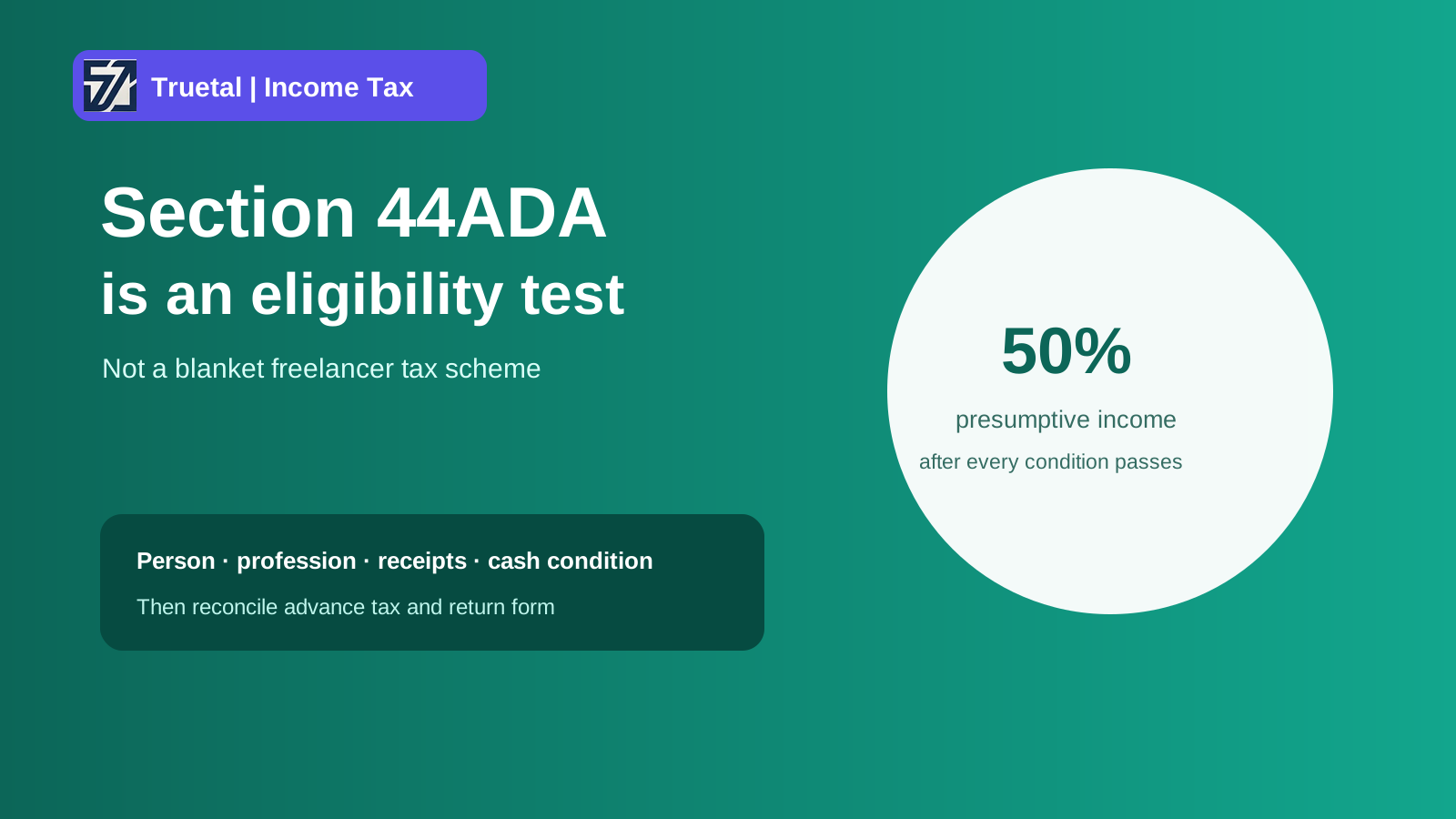
- Mixing the income-tax question “which expenses are deductible?” with the GST question “is ITC eligible?”
How professional support helps
A useful review connects registration, contracts, invoices, payments, expenses and returns. Freelancer accounting services can organise that evidence and keep recurring bookkeeping separate from the final legal and filing decisions.
FAQ
Do freelancers need GST registration in India?
It depends on PAN-wide aggregate turnover, the State, the nature and location of supplies, exemptions and any compulsory-registration trigger. The ordinary services threshold is generally ₹20 lakh, with a lower threshold in specified special-category States, but the complete facts must be checked.
Does an overseas client automatically make my service GST-free?
No. The service must satisfy every condition in the statutory export-of-services definition, including the applicable place-of-supply and receipt conditions. Some services can fail the export test even when the customer is abroad.
Is export turnover counted for the GST registration threshold?
Export supplies form part of aggregate turnover even though qualifying exports are zero-rated. Do not exclude them when testing registration liability.
Can a registered freelancer export services without paying IGST?
Commonly yes, under a valid LUT where the legal conditions are satisfied. The alternative permitted route involves payment of IGST and a refund claim. Confirm the current process for the relevant financial year.
Should my invoice equal the amount credited by the bank?
Not always. Bank fees and exchange differences can make the credit differ from the invoice. Keep the invoice, fee and exchange movement as separate supported records.
The takeaway
For freelancer GST, sequence matters: test registration using all PAN-wide turnover, classify each supply, prove any export conditions, invoice correctly, then reconcile the return and bank evidence. A label such as “freelancer” or “foreign client” cannot replace those steps.