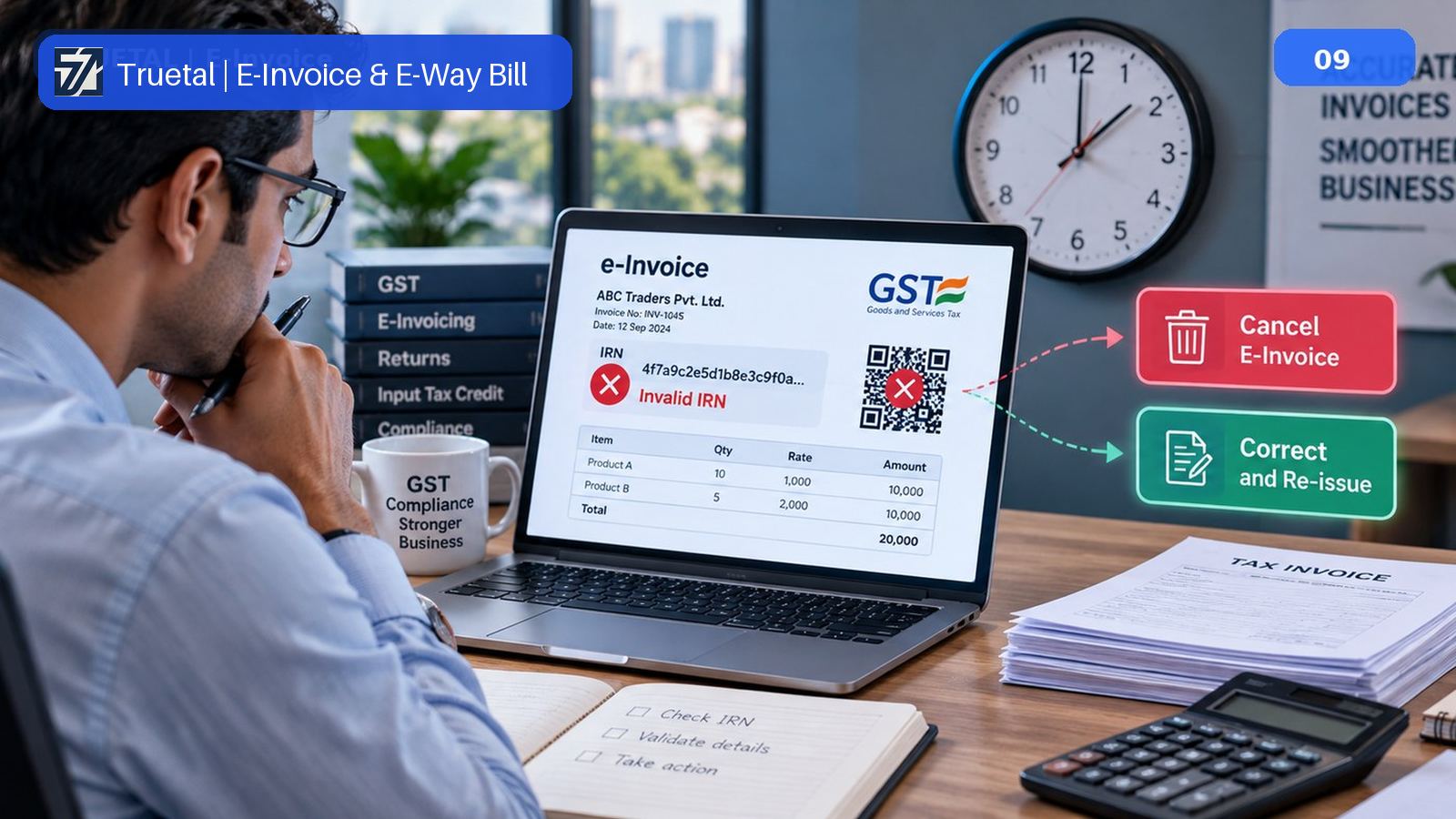

The direct answer
The 57th GST Council recommended extending e-invoicing to two inward-supply situations for taxpayers with aggregate annual turnover of exceeding ₹5 crore:
- domestic supplies received from an unregistered person where the recipient pays GST under reverse charge; and
- imports of services.
This is an important ERP and accounts-payable change because the existing e-invoice conversation usually begins with a supplier's outward B2B invoice. The recommendation moves attention to records created or accounted for by the recipient.
Status as of 9 October 2026: Recommendation only. No commencement date, final notification, schema, IRP workflow or production API instruction for this expansion was stated in the Council release. Continue following the current e-invoicing and RCM rules until implementation is notified.
What is different about the proposed scope
| Transaction | Position to follow now | Proposed direction |
| Registered supplier issues an ordinary B2B invoice | Apply the current e-invoice mandate and exemptions | No special change described here |
| Unregistered domestic supplier; recipient liable under RCM | Apply current self-invoice, RCM and documentation rules as applicable | E-invoicing proposed for covered ₹5 crore+ recipients |
| Import of services | Apply current import-of-service and RCM treatment | E-invoicing proposed for covered ₹5 crore+ taxpayers |
| Purchase not liable under RCM | Apply ordinary purchase rules | Not brought into scope by this sentence alone |
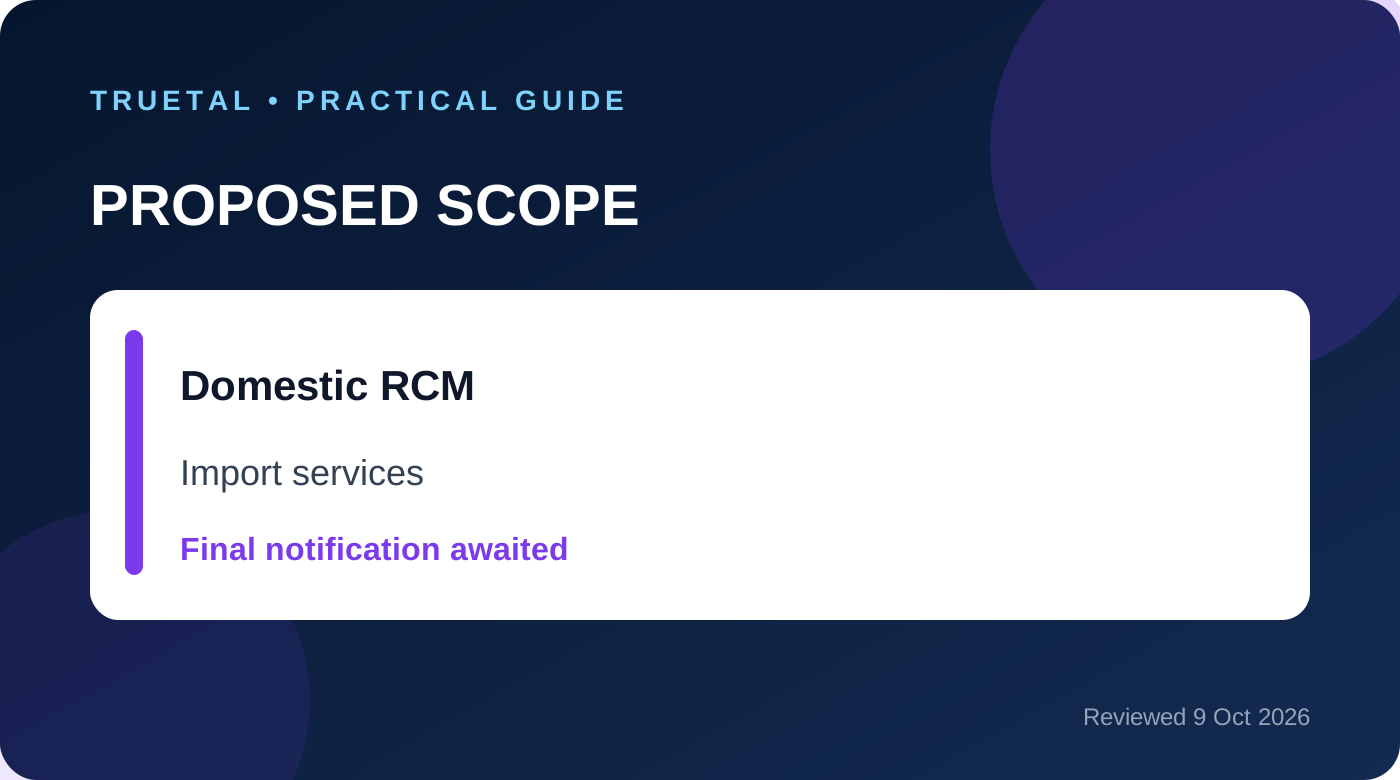
The phrase “exceeding ₹5 crore” should not be converted into code without the final notification. Teams still need to know how aggregate turnover will be tested, which financial years count, whether notified-person exemptions apply, and which document types the IRP will accept.
Worked example
Assume a company above the stated turnover level buys a taxable service from an unregistered domestic consultant and the service falls under a notified reverse-charge category. It also receives a software service from a foreign supplier.
Today, the accounts team should determine the tax position, create the legally required internal documentation, pay RCM when due, and claim ITC only when eligible. It should not generate a new type of IRN solely because of the Council press release.
For readiness, however, the team can map these fields now: transaction class, supplier registration status, supplier country and place, self-invoice/document number, taxable value, tax heads, RCM payment period, ITC eligibility period and links to the contract and payment evidence. When the final schema arrives, this structured record can be mapped without rebuilding purchase history.
Readiness checklist
- Identify every domestic unregistered-supplier purchase separately.
- Mark which inward supplies are actually liable under RCM; do not treat all unregistered purchases alike.
- Maintain an import-of-services register with supplier country, agreement, invoice, foreign payment and place-of-supply analysis.
- Calculate AATO using the final notified method before enabling any mandate.
- Keep self-invoice and payment-voucher controls aligned with current law.
- Separate RCM tax payment from the later ITC eligibility decision.
- Wait for official IRP schema, document type, cancellation and reporting-window instructions.
- Test sandbox behaviour before any production rollout.
Common mistakes
- Saying all purchases from unregistered suppliers require e-invoicing.
- Treating the Council press release as a live IRN mandate.
- Assuming the ordinary outward B2B JSON will apply unchanged.
- Claiming ITC in the same period without checking RCM payment and eligibility conditions.
- Describing Truetal as an IRP or GSP when it does not currently generate IRNs.
The takeaway
Do not switch on a production mandate that does not yet exist. Build a reliable inward-RCM and import-service register, preserve source evidence and wait for the final legal and technical package. That is preparation without premature compliance.